A pole saw can effectively cut thick tree branches, particularly gas-powered and heavy-duty electric models, which are capable of handling limbs up to 8-12 inches in diameter. Understanding the tool’s capabilities, limitations, and employing proper techniques like the three-cut method are crucial for safe and efficient work. This guide provides detailed information on selecting the right pole saw and using it safely for demanding trimming tasks.
Can You Cut Thick Tree Branches With a Pole Saw? Understanding Its Capabilities
A pole saw is a specialized pruning tool that extends your reach, allowing you to cut branches high above the ground while keeping your feet firmly planted. It combines a chainsaw or a manual saw head with an extendable pole, designed primarily for trimming small to medium-sized limbs. However, modern pole saws, particularly gas-powered and heavy-duty electric models, are increasingly capable of handling thicker branches.
The primary purpose of a pole saw is to remove dead, diseased, or overgrown branches that are out of arm’s reach. This improves tree health, promotes new growth, and enhances safety by removing potential falling hazards. While generally ideal for branches up to 8-10 inches in diameter, some robust gas models can manage limbs exceeding 12 inches. It’s important to remember that the saw’s bar length, motor power, and the wood’s density are key factors determining its actual cutting capacity. For instance, an electric pole saw with a 10-inch bar can typically cut branches up to 8 inches thick, following a safe rule of thumb that the branch diameter should be about two inches less than the bar length.
Different Types of Pole Saws: Which One Handles Thicker Branches Best?
Choosing the right pole saw type is paramount when dealing with thicker branches, as their power and design vary significantly. Each category offers distinct advantages and disadvantages that influence its suitability for demanding cuts.
Electric Pole Saws (Corded and Cordless)
Electric pole saws are a popular choice for homeowners due to their lighter weight, lower noise, and minimal maintenance.
- Corded Electric Pole Saws: These saws offer consistent power as long as they are plugged into an outlet, making them suitable for prolonged use without battery concerns. They typically feature motors ranging from 6 to 10 amps and can handle branches from 4-6 inches for entry-level models, up to 8-10 inches for mid-range, and even 12 inches for heavy-duty variants with longer bars. Their main drawback is the limitation of reach due to the power cord.
- Cordless Electric Pole Saws: Powered by rechargeable batteries (commonly 20V, 40V, or 80V), these provide excellent portability and freedom of movement. While they offer less raw power than gas models and can drain batteries quickly on thick branches, advanced lithium-ion battery technology has significantly improved their performance. They are best suited for light to moderate tasks, often handling branches up to 6-8 inches, with some high-voltage models pushing that to 10 inches.
Gas-Powered Pole Saws
For serious cutting tasks involving thick branches, gas-powered pole saws are often the preferred option.
- Advantages: These saws deliver the most power and torque, allowing them to cut through denser, thicker wood with greater efficiency. With engine displacements typically ranging from 20cc to 35cc or more, they are built for demanding jobs and can comfortably tackle branches 8 inches or thicker, with many models capable of handling up to 12 inches or even larger.
- Disadvantages: Gas models are heavier, noisier, require more maintenance (fuel mixing, spark plug changes, air filter cleaning), and produce exhaust emissions. They are also generally more expensive. However, for extensive pruning of large, mature trees, their power is unmatched.
Manual Pole Saws
Manual pole saws are the simplest and most eco-friendly option, but their utility for thick branches is limited.
- Advantages: They are lightweight, inexpensive, require no fuel or electricity, and operate silently. They are ideal for precision cuts on small, easily accessible branches.
- Disadvantages: Cutting thick branches with a manual pole saw is incredibly labor-intensive, slow, and physically demanding. They are generally recommended for branches up to 2 inches in diameter. Attempting to cut anything substantially thicker would be inefficient and exhausting, potentially leading to improper cuts.
Comparing Popular Pole Saw Brands for Heavy-Duty Use
When it comes to cutting thick branches, some brands stand out for their robust construction, powerful motors, and reliable performance. While many manufacturers offer pole saws, focusing on those known for durability and power is key for demanding tasks. Brands like ECHO, Husqvarna, and Stihl are often favored for their professional-grade gas-powered models, renowned for their engine reliability and cutting prowess. For electric options, brands such as DEWALT, Greenworks, and WORX offer powerful battery-operated or corded models suitable for significant tasks, balancing performance with user-friendliness.
These brands often differentiate themselves through motor/engine size, bar length, chain quality, and overall build. Gas models from ECHO or Husqvarna, for instance, typically feature higher displacement engines (e.g., 25cc+) and longer bars (10-12 inches), providing the necessary torque for cutting through dense hardwoods. Electric heavy-duty options might boast higher voltage batteries (e.g., 60V, 80V) or powerful corded motors (e.g., 10-amp) paired with durable chains and auto-oiling systems to enhance performance and longevity during challenging cuts. The price range usually reflects this difference, with professional-grade gas saws being a higher investment than most electric models.
Detailed Comparison Table: Best Pole Saws for Challenging Cuts
| Model Type | Type | Max Reach (approx.) | Power Source | Pros (for thick branches) | Cons (for thick branches) | Estimated Price |
|---|---|---|---|---|---|---|
| ECHO PPT-2620 | Gas | 12-16 ft | 25.4cc Gas | High power, professional-grade, durable engine, excellent torque for thick cuts. | Heavier, louder, requires fuel mix, more maintenance. | $450 – $600 |
| Husqvarna 327P5x | Gas | 13-16 ft | 24.5cc Gas | Strong engine, ergonomic design, good balance for extended use, reliable for hardwoods. | Premium price, heavier, gas emissions. | $500 – $700 |
| DEWALT DCCS1620B (40V) | Cordless Electric | 10-15 ft | 40V Battery | Good power for cordless, excellent portability, quieter, less maintenance. | Battery life can limit extensive thick cutting, less torque than gas. | $250 – $400 (tool only) |
| Greenworks Pro 80V | Cordless Electric | 8-12 ft | 80V Battery | Very powerful for electric, quick cuts, no gas/emissions, low vibration. | Heavier battery, shorter runtime on thick branches, higher battery cost. | $300 – $500 (kit) |
| Poulan Pro PP258TP (25cc) | Gas | 8-12 ft | 25cc Gas | Affordable, good power for the price, suitable for regular heavy-duty use. | Not as refined or durable as higher-end professional models. | $200 – $300 |
Guide to Buying a Pole Saw for Thick Branches: Key Factors
Selecting the right pole saw for cutting thick branches requires careful consideration of several factors to ensure you get a tool that is effective, safe, and suited to your needs.
Blade Length and Type
For thick branches, opt for a pole saw with a longer bar, typically 10 to 12 inches. A longer bar allows you to make deeper cuts and reduces the chances of the saw binding in the wood. The chain type also matters; a more aggressive chain with larger, sharper teeth will cut through dense wood more efficiently. Ensure the blade is made from high-quality, durable steel to withstand the demands of heavy use.
Power Source
As discussed, the power source significantly impacts performance.
- Gas-powered pole saws offer superior power and are the best choice for consistently cutting branches 8 inches or thicker. Their robust engines provide the necessary torque to prevent stalling.
- High-voltage cordless electric pole saws (40V, 60V, 80V) can be a strong contender for branches up to 8-10 inches, offering a balance of power and convenience without the noise or emissions of gas models.
- Corded electric pole saws can handle similar thicknesses to cordless if the motor is powerful (e.g., 10 amps), but their portability is limited.
Engine/Motor Size
For gas pole saws, look for an engine displacement of at least 25cc or higher. This indicates sufficient power for heavy-duty tasks. For electric models, higher amperage (for corded) or higher voltage (for cordless) generally translates to more cutting power. A 10-amp corded saw or a 60V/80V cordless model will perform better on thick branches than lower-powered alternatives.
Weight and Balance
Cutting thick branches often means extended periods of overhead work, which can be tiring. While more powerful saws tend to be heavier, aim for a model that feels balanced and manageable for your strength. Some pole saws feature ergonomic designs, padded grips, and anti-vibration systems to reduce operator fatigue. Consider models with detachable powerheads that allow for lighter handheld use for lower branches.
Safety Features
Safety is paramount when operating any power tool, especially overhead. Look for features such as:
- Automatic chain oiler: Ensures proper lubrication, reducing friction and extending chain life.
- Chain brake: Stops the chain quickly in case of kickback.
- Anti-vibration system: Reduces fatigue and improves control.
- Secure locking mechanisms: For extendable poles to prevent accidental collapse.
- Comfortable, non-slip grips: Enhance control, especially when wet. Always wear appropriate personal protective equipment (PPE), including a hard hat, safety glasses, hearing protection, gloves, and sturdy footwear.
Price and Budget
Pole saw prices vary widely depending on the type, brand, and features. Manual saws are the most affordable, followed by corded electric, then cordless electric, and finally gas-powered models, which represent the highest investment. Determine your budget but prioritize quality and safety, especially if you plan to frequently cut thick branches. A more expensive, durable, and powerful saw may be a better long-term investment than a cheaper model that struggles with the task or breaks down quickly.
Top Picks: Highly-Rated Pole Saws for Demanding Tasks
For homeowners and landscapers tackling demanding thick branch removal, certain pole saws consistently receive high marks for their performance and durability.
- ECHO PPT-2620 Professional Pole Pruner: This gas-powered beast is often cited as a top choice for professionals. Its 25.4cc professional-grade engine delivers exceptional power, making quick work of large branches up to 12 inches or more. With an impressive extendable reach, it combines brute force with reliable performance, though its weight and cost are higher. This is the go-to for serious, frequent heavy cutting.
- Husqvarna 327P5x Pole Saw: Another strong contender in the gas category, the Husqvarna 327P5x offers a powerful 24.5cc engine and excellent ergonomics. It’s known for its robust construction, long reach, and ability to power through dense wood with ease. Arborists and homeowners with large properties appreciate its reliability and cutting efficiency for challenging tasks.
- DEWALT DCCS1620B 40V MAX Pole Saw: For those preferring the convenience of cordless electric, this DEWALT model stands out. Its 40V battery system provides impressive power for an electric unit, easily handling branches up to 8-10 inches. The 8-inch bar and lightweight design make it maneuverable, while the battery power offers freedom from cords and gas. It’s an excellent choice for substantial residential cutting without the maintenance of a gas saw.
- Greenworks Pro 80V Cordless Pole Saw: Pushing the boundaries of electric power, the Greenworks Pro 80V offers near-gas performance for many users. With its powerful 80V motor and a 10-inch bar, it can tackle thick branches up to 10-12 inches, making it a viable alternative to gas for many heavy-duty tasks. Its significant power, low noise, and zero emissions are major advantages, though extra batteries might be needed for extended use.
- Poulan Pro PR28PS Pole Saw: A more budget-friendly gas option, the Poulan Pro PR28PS still delivers respectable power with its 28cc 2-cycle engine. It’s a solid choice for homeowners needing more power than electric models can offer without the professional-grade price tag of an ECHO or Husqvarna. It typically handles branches up to 8-10 inches effectively.
Safe and Effective Techniques for Cutting Thick Branches with a Pole Saw
Cutting thick branches with a pole saw requires more than just power; proper technique and strict adherence to safety protocols are paramount to prevent injury to yourself or damage to the tree.
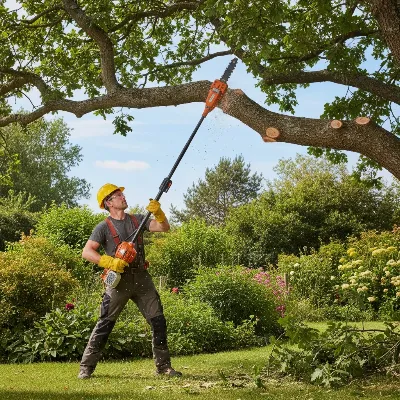 A person safely cutting a thick tree branch with a gas-powered pole saw, wearing safety gear
Pre-Cutting Safety Checklist
Before starting, always inspect your pole saw to ensure it’s in good working order: chain sharp and properly tensioned, auto-oiler working, fuel/battery charged. Wear all necessary PPE, including a hard hat, safety glasses, hearing protection, gloves, and sturdy, non-slip footwear. Clear the work area of any obstructions and ensure no one is standing beneath the branch you’re cutting. Never work near power lines. If a branch is too large, too high, or near structures or power lines, always call a professional arborist.
The Three-Cut Method
For any branch thicker than 2-3 inches, especially thick ones, employ the “three-cut method” to prevent bark stripping and damage to the main trunk.
- First Cut (Undercut): Make an undercut on the bottom side of the branch, about 6-12 inches away from the trunk or the collar you want to leave. Cut about one-third to one-half of the way through the branch. This prevents the branch from tearing bark down the trunk when it falls.
- Second Cut (Top Cut): Move a few inches further out from your first cut (away from the trunk) and make a complete top cut through the branch. This will cause the bulk of the branch to fall, relieving weight and preventing splitting.
- Third Cut (Final Cut): Now, with only a small stub remaining, make your final cut close to the branch collar. The branch collar is the swollen area where the branch meets the trunk. Cut just outside this collar, at a slight angle, to allow the tree to heal properly. Avoid cutting flush with the trunk, as this can impede healing.
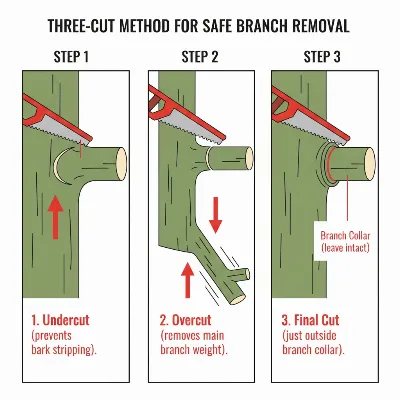 An illustrative diagram demonstrating the three-cut method for large tree branches
Maintaining Stability and Control
Maintain a firm grip on the pole saw with both hands. Keep your feet shoulder-width apart and maintain a balanced stance. Avoid overreaching or extending the pole saw to its absolute maximum length if it compromises your control. Let the saw’s weight and power do the work; don’t force it. Allow the chain to cut at its own pace to prevent kickback or binding. Be aware of where the branch will fall and ensure your exit path is clear.
Post-Operation Maintenance
After each use, especially after cutting thick branches, perform essential maintenance:
- Clean: Remove sawdust, sap, and debris from the bar, chain, and engine/motor housing.
- Sharpen/Replace Chain: A sharp chain is crucial for efficiency and safety. Dull chains can bind, overheat, and lead to kickback.
- Lubricate: Check and refill the chain oil reservoir for automatic oilers. For manual saws, apply chain oil.
- Inspect: Check for any damage to the pole, chain, or motor.
> “While a powerful pole saw can tackle substantial branches, always remember that no tool can replace the judgment of an experienced arborist for branches that are exceptionally large, decayed, or pose a significant risk near structures or power lines. Safety should always be your top priority.” – Dr. Eleanor Vance, Certified Arborist and Tree Health Specialist
Conclusion
Cutting thick tree branches with a pole saw is an achievable DIY task, provided you select the right tool for the job and prioritize safety and proper technique. Modern pole saws, especially robust gas-powered models and high-voltage electric variants, are designed to handle significant branch diameters, often up to 8-12 inches. By understanding the capabilities of different pole saw types, investing in a powerful model with a sufficient bar length, and meticulously following the three-cut method and general safety guidelines, you can maintain a healthy, beautiful yard from the ground. Remember that while pole saws offer incredible reach and cutting power, recognizing your limits and knowing when to call a professional arborist is the hallmark of a responsible DIYer. What challenging branch awaits your skilled hand and the right pole saw?
Frequently Asked Questions
What is the thickest branch a typical pole saw can cut?
A typical pole saw, especially a powerful gas or heavy-duty electric model, can cut branches up to 8-10 inches in diameter. Some professional-grade gas pole saws with longer bars can tackle branches up to 12 inches or more, though this often requires advanced skill and adherence to safety protocols.
When should I call an arborist instead of using a pole saw for thick branches?
You should call an arborist if branches are over 10-12 inches thick, located near power lines or structures, or if they require cuts at precarious angles. Professionals have specialized equipment and training to safely remove very large or hazardous limbs that pose risks beyond a DIYer’s capability.
Is a gas or electric pole saw better for thick branches?
A gas-powered pole saw is generally better for consistently cutting thick branches due to its superior power and torque. However, high-voltage cordless electric pole saws (e.g., 60V or 80V) offer a powerful, quieter, and more convenient alternative for many substantial tasks, often handling branches up to 8-10 inches.
What is the “three-cut method” and why is it important for thick branches?
The “three-cut method” involves making an undercut, then a top cut further out to remove the branch’s weight, followed by a final cut near the branch collar. This technique prevents the branch from tearing off prematurely and stripping bark down the tree trunk, ensuring a clean cut that promotes proper healing.
What safety gear do I need when cutting thick branches with a pole saw?
Always wear a hard hat, safety glasses, hearing protection, heavy-duty gloves, and sturdy footwear. These items protect against falling debris, sawdust, noise, and potential kickback. Ensuring the area beneath the cut is clear and free of people is also crucial for safety.
Can a manual pole saw cut thick branches effectively?
While a manual pole saw can make cuts on smaller branches (typically up to 2 inches), it is not effective for thick branches. Attempting to cut substantial limbs manually with a pole saw is extremely strenuous, time-consuming, and can lead to fatigued, imprecise cuts that might damage the tree or be unsafe.
How does bar length relate to a pole saw’s cutting capacity?
As a general rule, a pole saw can safely cut a branch that is about 2 inches smaller than its bar length. For example, a 10-inch bar is ideal for branches up to 8 inches in diameter. A longer bar length provides more cutting surface, which is essential for successfully felling thicker branches.
Cutting Thick Branches with a Pole Saw
Learn the safe and effective three-cut method for removing thick tree branches using a pole saw, preventing damage to the tree and ensuring personal safety.
Before starting, inspect your pole saw to ensure the chain is sharp and tensioned, the auto-oiler works, and the fuel/battery is charged. Wear a hard hat, safety glasses, hearing protection, gloves, and sturdy footwear. Clear the work area and ensure no one is beneath the branch.
For branches thicker than 2-3 inches, make an undercut on the bottom side of the branch, 6-12 inches from the trunk. Cut about one-third to one-half of the way through. This prevents bark stripping when the branch falls.
Move a few inches further out from your first cut (away from the trunk) and make a complete top cut through the branch. This will cause the main weight of the branch to fall, relieving pressure and preventing splitting.
With only a small stub remaining, make your final cut close to the branch collar, just outside the swollen area where the branch meets the trunk. Cut at a slight angle to promote proper tree healing and avoid cutting flush with the trunk.
Maintain a firm, two-handed grip on the pole saw with a balanced stance. Avoid overreaching and let the saw's power do the work without forcing it. Be aware of the branch's fall path and ensure your exit route is clear.

This information was exactly what I needed! I had a few stubborn branches that were too high for my regular chainsaw, and I didn’t want to pay a professional. Understanding the difference between gas and electric models for thick branches helped me choose the right tool for my specific needs. My yard looks so much better now, and I feel much safer doing it myself.
I was really struggling with some overgrown oak branches that were getting too close to my roof. This guide helped me pick out a heavy-duty electric model, and it made a huge difference. I was able to tackle limbs up to 10 inches with surprising ease, and the three-cut method mentioned here was a lifesaver for safety. Highly recommend doing your research before buying!
I bought a new pole saw based on some of the recommendations for cutting thick branches, specifically looking for something that could handle 12-inch diameter. While it’s good for most of my yard work, I found it struggled a bit with the really dense, older wood at that maximum diameter. It got through eventually, but it took more effort and time than I anticipated. Maybe my technique needs work, or I just got a particularly tough branch.
I’ve always been a bit intimidated by gas-powered tools, but after reading about their capabilities for thicker branches, I decided to give one a try. It definitely has the power needed for those 8-inch limbs I was dealing with. The only reason it’s not a 5-star is that it’s a bit heavier than I expected, making longer jobs a bit tiring. Still, it gets the job done.