Tackling overgrown branches can feel like an impossible task, transforming your beautiful yard into a wild jungle. High limbs not only detract from your property’s aesthetic but can also pose significant safety hazards during storms or strong winds. This is where a pole saw becomes an indispensable tool, offering a safe and efficient way to manage your tree canopy from the ground. But with rapid advancements in outdoor power equipment, homeowners and professionals alike face a critical choice: should you opt for the raw power of a gas pole saw or the modern convenience of a battery-powered model? Let’s delve into the specifics of each to help you make an informed decision for your pruning needs in 2026.
Pole Saw: What It Is and Why You Need One
A pole saw is essentially a chainsaw or pruning blade attached to a long, extendable pole, designed to reach and cut branches that are typically out of arm’s reach. This innovative design eliminates the dangerous need for ladders or precarious climbing, drastically improving safety during tree maintenance. Whether you’re a homeowner looking to keep your yard tidy, a landscaper maintaining multiple properties, or a property owner clearing trails, a pole saw is a game-changer. It allows you to remove dead or diseased limbs, shape trees, and clear storm debris with greater control and significantly reduced risk. The primary benefit is the ability to perform precise cuts while keeping your feet firmly on the ground.
Understanding Pole Saw Types: Gas vs. Battery
The core difference between gas and battery pole saws lies in their power source, which in turn dictates their performance, convenience, and ideal applications. Each type brings its unique set of advantages and disadvantages to your pruning tasks. For reviews buying guides on this site.
Gas Pole Saws: Unleashing Raw Power
Gas-powered pole saws are the traditional workhorses of the industry, renowned for their sheer power and endurance. They are driven by small internal combustion engines, typically 2-stroke or 4-stroke, that deliver impressive torque, making them adept at slicing through thick, dense branches with authority.
- Advantages:
- Superior Power: Gas models generally offer the most cutting power, easily handling larger, tougher branches and small trees that might overwhelm electric alternatives.
- Unlimited Runtime: As long as you have a supply of fuel, a gas pole saw can run continuously, making it ideal for extensive projects or remote locations without access to electricity.
- Heavy-Duty Performance: Designed for demanding tasks, they are often favored by professionals and those with large properties.
- Disadvantages:
- Weight and Fatigue: The engine and fuel tank add considerable weight, often making gas pole saws heavier and more fatiguing to operate for extended periods.
- Noise and Emissions: They are significantly louder than battery models and produce exhaust fumes, which can be an environmental concern and less neighbor-friendly.
- Maintenance Requirements: Gas saws require more frequent maintenance, including fuel mixing (for 2-stroke), spark plug checks, air filter cleaning, and oil changes.
- Starting Difficulty: Can be challenging to start, especially in cold weather, often requiring multiple pull-starts.
- Ideal Applications: Large estates, commercial landscaping, clearing storm damage, professional arboriculture, or any situation requiring maximum power and extended operation away from power sources.
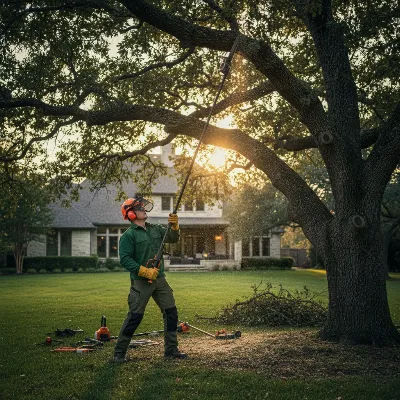 A professional landscaper operating a powerful gas pole saw to trim a thick tree branch safely from the ground. The sun is setting, casting long shadows across a large, well-maintained property. Realistic style.
Battery Pole Saws: The Rise of Cordless Convenience
Battery-powered pole saws have dramatically improved in recent years, offering a compelling alternative to gas models. Utilizing advanced lithium-ion battery technology and often brushless motors, these tools deliver a blend of power and unparalleled convenience.
- Advantages:
- Portability and Mobility: Cordless operation provides ultimate freedom of movement, allowing you to prune anywhere in your yard without the hassle of extension cords.
- Lighter Weight: Generally lighter than their gas counterparts (though the battery adds some weight), making them easier to maneuver and less tiring to use.
- Quiet Operation: Significantly quieter, which is a major benefit in residential areas and for reducing user fatigue.
- Lower Maintenance: Requires minimal maintenance beyond chain care and battery charging. No fuel mixing, spark plugs, or oil changes needed.
- Zero Emissions: Environmentally friendly with no exhaust fumes.
- Easy Starting: Instant, push-button starting.
- Disadvantages:
- Limited Runtime: Battery life is finite, typically 30-60 minutes per charge, which can be a drawback for larger jobs unless spare batteries are on hand.
- Power Fluctuation: Power can diminish as the battery drains, affecting cutting performance on tougher materials.
- Upfront Cost: Often have a higher initial purchase price, especially when factoring in batteries and chargers.
- Battery Management: Batteries have a lifespan and will eventually need replacement, adding to long-term costs. Cold weather can also affect battery performance.
- Ideal Applications: Small to medium-sized yards, routine pruning, residential use, areas where noise is a concern, or for users who value ease of use and environmental benefits.
Comparison Table: Gas vs. Battery Pole Saws
| Feature | Gas Pole Saws | Battery Pole Saws |
|---|---|---|
| Power Output | High (excellent for thick branches) | Moderate to High (good for medium branches, improving) |
| Runtime | Unlimited (with fuel supply) | Limited (30-60+ minutes per charge, dependent on battery) |
| Weight | Heavier (due to engine/fuel) | Generally lighter (battery adds some weight) |
| Noise Level | Loud | Quiet |
| Emissions | Produces exhaust fumes | Zero direct emissions |
| Maintenance | Higher (fuel mix, spark plugs, filters) | Lower (battery care, chain maintenance) |
| Starting | Pull-start, can be challenging | Push-button, instant start |
| Upfront Cost | Often lower for comparable power | Higher (includes battery/charger) |
| Running Cost | Fuel, oil, maintenance parts | Electricity for charging, eventual battery replacement |
| Portability | Cordless, but heavier/bulkier | Cordless, easier to maneuver |
| Environmental | Higher impact (fumes, noise) | Lower impact (quiet, no fumes) |
Buying Guide: Factors to Consider When Choosing Your Pole Saw
Selecting the right pole saw hinges on understanding your specific needs and the types of tasks you’ll be undertaking.
Power and Cutting Capacity
If your property features mature trees with thick, stubborn branches, a gas pole saw’s superior power will be invaluable. They are built to tackle branches typically over 6-8 inches in diameter. For routine pruning of smaller to medium-sized limbs (up to 6-8 inches), modern battery pole saws with brushless motors offer ample power and clean cuts, with some higher-voltage models even rivaling gas performance.
Reach and Weight
Consider the maximum height of the branches you need to trim. Pole saws offer varying lengths, often telescoping for adjustable reach. Remember that a longer pole, especially when combined with a heavier powerhead (like on a gas model), can significantly increase arm fatigue and make precise control challenging. Battery models tend to be more balanced and lighter, which can make a big difference during prolonged overhead work.
Runtime and Charging
For extensive projects that require hours of continuous cutting, gas pole saws offer the advantage of simply refilling the fuel tank. Battery pole saws, however, are limited by their charge. If you choose battery, consider investing in multiple batteries or a fast charger to minimize downtime. Many modern battery systems allow you to share batteries across various lawn and garden tools, which can be a significant economic and convenience factor.
Noise and Emissions
If you live in a residential area or prefer a quieter working environment, a battery pole saw is the clear winner. Their low noise output allows for earlier morning or later evening work without disturbing neighbors. The absence of exhaust fumes also makes for a more pleasant and environmentally friendly operating experience.
Maintenance and Ease of Use
Battery pole saws are generally simpler to operate and maintain. They start instantly, require no fuel mixing, and have fewer moving parts to service. Gas pole saws demand more attention: regular fuel mixing, spark plug changes, air filter cleaning, and careful winterization. If you prefer a grab-and-go tool with minimal fuss, battery is likely your best bet.
Cost
The upfront cost of a gas pole saw can sometimes be lower than a battery model (especially if you need to buy batteries and a charger separately for the battery unit). However, the ongoing costs for gas, oil, and more frequent maintenance for a gas saw can quickly add up. Battery models, while initially more expensive, typically have lower long-term running costs, though battery replacement is an eventual expense.
Top Picks: Preferred Gas and Battery Pole Saws in 2026
Based on current trends and user feedback, several models stand out in both categories:
Recommended Gas Pole Saws
- Stihl HT 56CE: A popular choice for its balance of power, affordability, and smooth operation, making it lighter than many heavy-duty battery saws.
- Husqvarna 122LKP: Known for its versatile 21.7cc engine and excellent cutting performance, often praised for its multi-tool attachment capabilities.
- STIHL HT 135: A robust, professional-grade option with a powerful 36.3cc engine and 14-inch bar, built for the toughest jobs and exceptional durability.
Recommended Battery Pole Saws
- Stihl HTA 135: Often cited as a top electric performer, offering wicked fast cutting, great balance, and excellent battery life, despite its higher price and weight.
- EGO Power+ PS1001 56V: Delivers professional-level torque and extended reach, especially suited for mixed hardwoods and cold climates, known for outstanding battery life.
- DEWALT DCPS620B 20V MAX XR: Praised for its robust build, brushless motor, and excellent balance, providing professional-grade performance and a generous 15-foot reach.
- Milwaukee M18 Fuel: A strong contender for value, versatility, and cutting speed, especially for those already invested in the M18 battery platform.
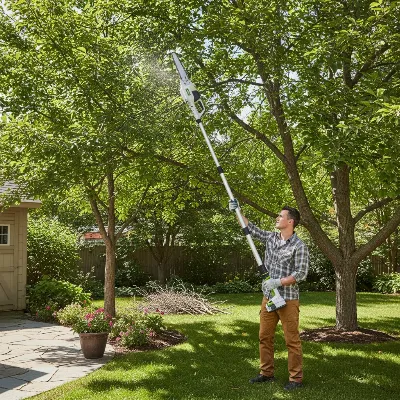 A homeowner using a lightweight battery-powered pole saw to trim high branches in a suburban backyard during daylight. The scene is bright and shows the tool in action, with trimmed branches on the ground. Editorial style.
Using and Maintaining Your Pole Saw Correctly
Regardless of whether you choose gas or battery, proper usage and maintenance are crucial for safety and tool longevity.
Safety First
Always wear appropriate personal protective equipment (PPE), including safety glasses, gloves, a hard hat, and hearing protection (especially with gas models). Ensure your work area is clear of people and pets, and always be aware of your surroundings, particularly power lines. Start with smaller cuts and work your way through the branch, never overreaching or cutting above shoulder height with a fully extended pole.
Operation Tips
Familiarize yourself with your specific model’s manual. For battery saws, ensure batteries are fully charged before starting. For gas saws, use the correct fuel-to-oil mixture (for 2-stroke) and ensure the engine is properly warmed up. Always let the saw do the work; don’t force it through branches. Maintaining a steady, controlled motion will result in cleaner cuts and prevent kickback.
Maintenance Essentials
- Chain Care: Keep the chain sharp and properly tensioned. A dull chain is inefficient and dangerous. Regularly check and refill the chain oil reservoir.
- Cleaning: After each use, clean debris, sawdust, and sap from the bar, chain, and powerhead.
- Gas Saws:
- Check spark plugs and air filters regularly, cleaning or replacing as needed.
- Properly store fuel and, for seasonal use, drain fuel or use a fuel stabilizer to prevent carburetor issues.
- Battery Saws:
- Store batteries in a cool, dry place and follow manufacturer guidelines for charging and discharge cycles to maximize lifespan.
- Avoid charging batteries in extreme temperatures.
> “Choosing between a gas and battery pole saw isn’t about one being universally better; it’s about matching the tool to your terrain, task, and personal preference. Modern battery technology has closed the power gap significantly, but for the most demanding jobs, gas still holds an edge in sheer endurance.” – Dr. Eleanor Vance, Arboriculture Specialist
Conclusion
The choice between a gas and battery pole saw in 2026 ultimately depends on your specific needs, the size of your property, and the type of pruning you’ll be doing. Gas pole saws remain the champions of raw power and unlimited runtime, ideal for heavy-duty professional tasks and large, remote properties. Battery pole saws, on the other hand, excel in convenience, quiet operation, and lower maintenance, making them perfect for most residential users who prioritize ease of use and environmental considerations. As battery technology continues to evolve, the performance gap narrows, offering more powerful and longer-lasting cordless options than ever before. Carefully weigh the advantages and disadvantages against your unique requirements, and you’ll undoubtedly find the perfect pole saw to keep your trees healthy and your property pristine.
What kind of pruning challenges are you hoping to solve with your next pole saw?
Frequently Asked Questions
Is a battery pole saw powerful enough for thick branches?
Modern battery pole saws, especially those with higher voltage (e.g., 40V, 56V, or 80V) and brushless motors, are surprisingly powerful. They can efficiently cut through branches up to 6-8 inches in diameter, and some high-end models can even handle thicker limbs, approaching the performance of lighter gas models. For occasional or medium-duty trimming, they are often more than sufficient.
How long does a battery pole saw last on a single charge?
Battery runtime varies significantly based on the battery’s amp-hour (Ah) rating, the voltage of the saw, and the intensity of the cutting task. On average, you can expect 30 to 60 minutes of continuous cutting on a single charge. For larger projects, it’s advisable to have a spare battery or factor in recharge times. Many brands offer interchangeable batteries across their tool lines, which can be very convenient.
