A dirty pole saw carburetor can cause sputtering, starting issues, or power loss, but it can be safely cleaned at home using specific tools and a step-by-step process. This DIY approach involves careful disassembly, thorough cleaning with carburetor cleaner and compressed air, and precise reassembly, typically taking 1-2 hours depending on experience. Addressing a clogged carburetor restores your pole saw’s performance and prevents more significant engine problems.
Understanding Your Pole Saw Carburetor: The Engine’s Breath
Your pole saw’s carburetor is a sophisticated device responsible for mixing air and fuel in precise proportions before sending the mixture to the engine’s combustion chamber. This air-fuel ratio is critical for efficient engine operation. Over time, fuel, especially that containing ethanol, can degrade and leave behind sticky residues, varnish, and sludge. These deposits can block the tiny passages and jets within the carburetor, disrupting the delicate balance of the air-fuel mixture and causing a host of performance issues.
Is Your Pole Saw Carburetor Dirty? Recognizing the Symptoms
Identifying a dirty carburetor early can prevent more significant problems. Common signs that your pole saw’s carburetor needs attention include:
- Difficulty Starting or Failure to Start: If your pole saw struggles to fire up, or simply won’t start at all, a clogged carburetor is a frequent culprit, preventing the engine from receiving the correct fuel mixture.
- Rough Idling or Stalling: An engine that idles unevenly, surges, or consistently stalls when running is often suffering from obstructed fuel flow within the carburetor.
- Lack of Power or Bogging Down: When you engage the throttle and the engine hesitates, bogs down, or lacks its usual cutting power, it’s a strong indication that the fuel delivery system is compromised.
- Excessive Smoke or Increased Fuel Consumption: A carburetor that’s delivering too much fuel (a “rich” mixture) can lead to black smoke from the exhaust and a noticeable increase in fuel usage.
It’s important to note that some of these symptoms can overlap with other issues, such as a dirty air filter or a faulty spark plug. However, if these basic checks don’t resolve the problem, the carburetor is usually the next logical component to inspect.
Safety First: Essential Precautions for Carburetor Cleaning
Before you begin any work on your pole saw’s engine, prioritizing safety is paramount. Carburetor cleaning involves handling fuel and harsh chemicals, so careful preparation is key.
- Disconnect the Spark Plug Wire: This is a crucial first step to prevent accidental engine starts while you’re working on the machine.
- Wear Personal Protective Equipment (PPE): Always don safety glasses to protect your eyes from fuel or cleaner splashes, and wear chemical-resistant gloves to shield your hands from petroleum products and carburetor cleaning solutions.
- Work in a Well-Ventilated Area: Carburetor cleaners emit strong fumes. Ensure you’re working outdoors or in a well-ventilated garage to avoid inhaling these chemicals.
- Beware of Small Parts: Carburetors contain many tiny components like springs, O-rings, and jets that can easily be lost. Work on a clean, organized surface and consider using a parts tray to keep everything contained.
- Carburetor Cleaner Precautions: While effective, carburetor cleaners can damage rubber and plastic components. Avoid spraying them directly onto diaphragms, O-rings, and fuel lines unless specified by the product. Always read the cleaner’s instructions carefully.
> “Always remember, safety isn’t just a recommendation; it’s a critical step to ensure your DIY project is successful and free from hazards.” – John Mechanic, Small Engine Repair Specialist
Tools and Materials You’ll Need for the Job
Gathering all your tools and materials before you start will streamline the cleaning process:
- Basic Hand Tools:
- Phillips and flat-head screwdrivers (various sizes)
- Needle-nose pliers
- Socket wrench set or combination wrenches (for carburetor mounting bolts)
- Cleaning Specifics:
- Carburetor cleaner spray (aerosol can of “carb and choke cleaner”)
- Compressed air (can or air compressor with a blow gun)
- Carburetor cleaning kit (includes small wires, brushes, and needles for tiny passages)
- Small wire brush (for general scrubbing of metal parts)
- Support Materials:
- Shop towels or clean rags
- Parts tray or small containers to organize disassembled components
- New gaskets and/or a carburetor rebuild kit (optional, but highly recommended, especially for older units)
- Fresh, ethanol-free fuel and fuel stabilizer (for testing and future prevention)
For heavily gummed-up carburetors, a gallon of carburetor dip or even an ultrasonic cleaner can provide a more thorough clean, though these are more advanced options.
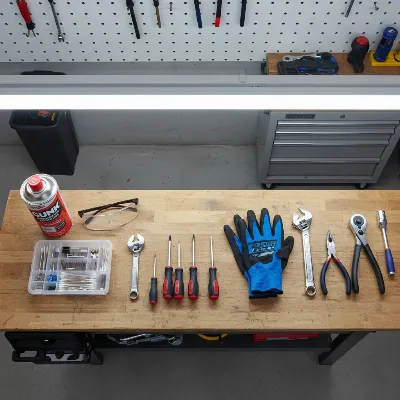 Essential tools for safely cleaning a pole saw carburetor laid out on a workbench
Step-by-Step Guide: Safely Cleaning Your Pole Saw Carburetor
Cleaning a pole saw carburetor involves careful disassembly, thorough cleaning, and precise reassembly. Follow these steps meticulously:
1. Preparation and Disconnection
Before touching the carburetor, ensure your pole saw is cold and on a stable, flat surface. Turn the fuel valve off, if present, and remove the spark plug wire to prevent any accidental engine ignition. If the fuel tank contains old fuel, it’s a good idea to drain it into an approved container, as old fuel is the primary cause of carburetor clogs. Take several photos of how the fuel lines, linkages, and wires connect to the carburetor from different angles. These will be invaluable during reassembly.
2. Carburetor Removal
Begin by disconnecting the fuel lines from the carburetor. Note which line goes to the primer bulb, the fuel tank, and any return lines. Next, carefully detach the throttle linkage and choke rod. These are often small and can be tricky to reattach. Finally, use your socket wrench or screwdrivers to remove the bolts or nuts securing the carburetor to the engine manifold. Once loose, carefully pull the carburetor away from the engine, ensuring no other connections are still attached.
3. Disassembly of the Carburetor
With the carburetor removed, it’s time for careful disassembly. Place all small parts into your parts tray.
- Float Bowl Carburetors: Many smaller engines, though less common on modern pole saws which often use diaphragm carbs, might have a float bowl at the bottom. Unscrew the small bolts holding the float bowl in place and carefully remove it, being mindful of the gasket. Remove the float pin, then the float itself, and the needle valve.
- Diaphragm Carburetors: These are more common on pole saws. You’ll typically find a cover secured by several small screws. Beneath this cover will be a metering diaphragm and gasket. Carefully pry these off, as they can sometimes stick. Be cautious not to tear the diaphragm. Locate the main jet and any other smaller jets or idle screws. Use appropriate screwdrivers to remove these.
Keep all parts organized, ideally in the order they were removed, to simplify reassembly.
4. Thorough Cleaning
Now for the main event: cleaning.
- Spray and Soak: Generously spray all metal parts of the carburetor, including the main body, jets, and screws, with carburetor cleaner. For heavily soiled parts, you might consider soaking them in a carburetor dip solution (following product instructions). Crucially, avoid spraying or soaking any rubber or plastic components, such as diaphragms, O-rings, or needle tips, as the cleaner can cause them to swell and fail.
- Scrub and Clear: Use your small wire brush for exterior scrubbing. For internal passages and jets, employ the specialized brushes and wires from your carburetor cleaning kit. Thread the thin wires through every tiny hole and passage to dislodge stubborn deposits. Hold the jets up to a light source to ensure they are completely clear – even the smallest blockage can cause problems.
- Compressed Air: Once you’ve scrubbed and sprayed, use compressed air to thoroughly blow out all passages, jets, and crevices. This will remove any remaining cleaner and dislodged debris, ensuring all pathways are clear. Use caution not to blast small parts away.
- Dry: Allow all parts to air dry completely, or use compressed air to speed up the drying process, before proceeding to reassembly.
5. Reassembly and Installation
Reassemble the carburetor in the reverse order of disassembly.
- New Gaskets/O-rings: If you purchased a carburetor rebuild kit, now is the time to install the new gaskets and O-rings. This ensures a tight seal and prevents air leaks, which can severely impact engine performance.
- Component Installation: Carefully reinstall all jets, the needle valve, float (if applicable), and diaphragms. Ensure diaphragms are oriented correctly; there is usually a specific way they fit. Secure all covers and screws, being careful not to overtighten, which can strip threads or warp components.
- Mounting the Carburetor: Reattach the carburetor to the engine manifold, securing it with its bolts or nuts.
- Reconnect Lines: Refer to your photos and carefully reattach all fuel lines and the throttle linkage. Double-check that all connections are snug and correctly routed.
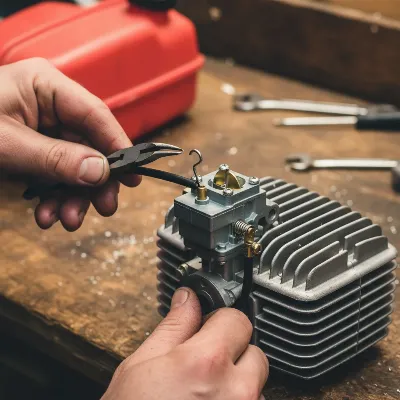 Reinstalling a cleaned pole saw carburetor with careful attention to connections.
Troubleshooting Common Issues After Cleaning
After all your hard work, it can be frustrating if your pole saw still doesn’t run perfectly. Here are some common post-cleaning issues and how to address them:
- Engine Still Won’t Start or Runs Poorly:
- Check for Air Leaks: Ensure all gaskets are properly seated and carburetor bolts are tightened evenly. An air leak can lead to a lean fuel mixture.
- Fuel Flow: Verify fuel lines aren’t pinched or clogged, and the fuel filter isn’t blocked.
- Spark and Air: Re-check the spark plug (ensure it’s clean and gapped correctly, or replace if old) and the air filter (clean or replace if dirty).
- Carburetor Adjustment: Small engines often have “idle,” “low,” and “high” speed adjustment screws. After cleaning, you may need to fine-tune these to achieve optimal performance. Consult your pole saw’s manual for specific adjustment procedures.
- If Cleaning Isn’t Enough: Sometimes, a carburetor is too far gone for a simple clean. If symptoms persist, consider installing a carburetor rebuild kit, which replaces internal components like diaphragms, gaskets, and sometimes jets. In severe cases, a complete carburetor replacement might be necessary.
Maintaining Your Pole Saw Carburetor for Longevity
Prevention is always better than cure. Following these maintenance tips will significantly extend the life of your pole saw’s carburetor:
- Use Fresh, Stabilized, Ethanol-Free Fuel: This is the most critical step. Ethanol can attract water and create corrosive deposits. Always use fuel stabilizer if you’re not using ethanol-free gas, especially during storage.
- Don’t Store with Fuel: For long-term storage (over a month), either run the engine until it runs out of fuel or drain the fuel tank and carburetor.
- Run Regularly: Periodically start and run your pole saw, even if just for a few minutes, to keep fuel circulating and prevent stagnation.
- Clean the Air Filter: A dirty air filter can restrict airflow, causing the engine to run rich and potentially foul the carburetor. Clean or replace it as per your pole saw’s maintenance schedule.
Conclusion
A dirty carburetor can quickly turn your powerful pole saw into a frustrating paperweight. By understanding the symptoms, gathering the right tools, and carefully following the step-by-step cleaning process, you can confidently restore your pole saw’s performance. Remember to prioritize safety throughout the procedure and adhere to proper maintenance practices, especially regarding fuel storage. With a clean carburetor, your pole saw will be ready to tackle any overgrown branches, ensuring your garden remains pristine season after season. What other small engine maintenance tasks do you find most challenging in your own garden?
Frequently Asked Questions
How often should I clean my pole saw carburetor?
The frequency depends on usage and fuel quality. If you use your pole saw regularly with stabilized, fresh fuel, annual cleaning might suffice. If it sits for long periods or uses older fuel, you might need to clean it more often, or whenever performance issues arise.
Can I use gasoline to clean a carburetor?
No, plain gasoline is not an effective carburetor cleaner and can be dangerous due to its flammability. Always use a dedicated carburetor cleaner solution, which contains specific solvents designed to break down fuel varnish and carbon deposits safely and effectively.
What happens if I don’t clean my carburetor?
Ignoring a dirty carburetor will lead to continued poor engine performance, including difficulty starting, stalling, and loss of power. Over time, severe clogging can cause engine damage due to incorrect fuel mixtures, potentially leading to costly repairs or even engine failure.
How do I know if my carburetor needs to be rebuilt instead of just cleaned?
If cleaning doesn’t resolve the performance issues, or if internal rubber components like diaphragms and O-rings are visibly cracked, stiff, or swollen, a rebuild kit is likely needed. These kits replace the wear-prone internal parts to restore proper function.
Is it okay to use carburetor cleaner on rubber parts?
No, it is generally not recommended to use standard carburetor cleaner on rubber or plastic components such as diaphragms, O-rings, and needle tips. The harsh chemicals can cause these parts to swell, become brittle, or degrade, leading to fuel leaks or further performance problems.
Frequently Asked Questions
How often should I clean my pole saw carburetor for optimal performance?
The frequency of cleaning depends on usage and fuel quality. For regular use with stabilized, fresh fuel, annual cleaning is often sufficient. If your pole saw is stored for long periods or uses older fuel, you may need to clean it more frequently, or whenever performance issues like sputtering or stalling arise.
Can I use regular gasoline to clean a pole saw carburetor?
No, plain gasoline is not an effective or safe carburetor cleaner due to its flammability and lack of specific solvents. Always use a dedicated carburetor cleaner solution, which contains chemicals designed to safely and effectively break down fuel varnish and carbon deposits without damaging metal components.
What are the consequences of not cleaning a dirty pole saw carburetor?
Ignoring a dirty carburetor will lead to continued poor engine performance, including difficulty starting, rough idling, stalling, and significant loss of power. Over time, severe clogging can cause engine damage due to an incorrect fuel mixture, potentially resulting in costly repairs or complete engine failure.
How do I determine if my pole saw carburetor needs a rebuild instead of just cleaning?
If cleaning the carburetor thoroughly does not resolve the performance issues, or if internal rubber components like diaphragms and O-rings are visibly cracked, stiff, or swollen, a rebuild kit is likely necessary. These kits replace the wear-prone internal parts to restore proper function and sealing.
Is it safe to use carburetor cleaner on rubber and plastic parts?
No, it is generally not recommended to use standard carburetor cleaner on rubber or plastic components such as diaphragms, O-rings, and needle tips. The harsh chemicals in most cleaners can cause these parts to swell, become brittle, or degrade, leading to fuel leaks or further performance problems. Always check the product instructions.
Safely Clean a Dirty Pole Saw Carburetor
This guide provides a step-by-step process for safely and effectively cleaning your pole saw's carburetor to restore its performance.
Ensure your pole saw is cold and on a stable surface. Turn off the fuel valve, remove the spark plug wire, and drain any old fuel. Take photos of all connections to aid reassembly.
Disconnect fuel lines, throttle linkage, and choke rod. Use appropriate tools to remove the bolts securing the carburetor to the engine manifold, then carefully detach it.
Carefully disassemble the carburetor, placing all small parts into a tray. For diaphragm carburetors, remove the cover, metering diaphragm, and jets. For float bowl types, remove the bowl, float, and needle valve.
Spray all metal parts with carburetor cleaner, avoiding rubber and plastic components. Use a cleaning kit to scrub and clear all passages and jets. Finally, use compressed air to blow out debris and allow parts to dry completely.
Reassemble the carburetor in reverse order, installing new gaskets and O-rings from a rebuild kit if available. Carefully reinstall all jets, diaphragms, and covers. Reattach the carburetor to the engine, reconnect fuel lines and linkages, ensuring all connections are snug.

I was having major sputtering issues with my pole saw, and I was about to give up and buy a new one. Following these steps for cleaning the carburetor saved me a ton of money. The detailed instructions on using carburetor cleaner and compressed air were super helpful. My saw runs like new now, no more power loss!
Fantastic guide! My pole saw was definitely suffering from a clogged carburetor, causing all sorts of starting problems. The explanation of the air-fuel ratio and why it’s so important really helped me understand what I was doing. After cleaning, it fired right up and has been running strong ever since. Highly recommend giving this a try before taking it to a shop.
Good info here, especially about how ethanol in fuel can cause those sticky residues. I followed the cleaning process, and while my saw is running better, it’s still not quite perfect. I think I might need to replace a gasket or something, which wasn’t really covered in depth. Still, a solid starting point for DIY.
This guide was a lifesaver! My pole saw wouldn’t even start, and I suspected it was the carburetor. The step-by-step disassembly and reassembly instructions made it manageable, even for someone not super mechanically inclined. It took me a bit longer than the 1-2 hours mentioned, but the end result was worth it.