Properly mixing fuel for your 2-stroke pole saw is essential for its longevity and optimal performance, as these engines rely on a precise gasoline and oil blend for both combustion and lubrication. An incorrect ratio can lead to significant engine damage, reduced efficiency, or complete failure. This guide details how to confidently mix fuel, ensuring your pole saw operates reliably.
Why Your 2-Stroke Pole Saw Needs the Perfect Fuel Mix
Two-stroke engines are lightweight and powerful, making them ideal for pole saws. Unlike 4-stroke engines, they lack an internal oil system; lubricating oil is mixed directly into the gasoline and burns off during operation. This design makes the fuel mix ratio critically important.
An incorrect fuel-to-oil ratio can severely damage your engine. Too little oil causes insufficient lubrication, leading to excessive friction, overheating, premature wear, and engine seizure. Conversely, too much oil results in carbon buildup on the spark plug, piston, and exhaust port, causing difficult starting, excessive smoke, reduced power, and inefficient operation. Understanding this balance is crucial for your pole saw’s health.
Decoding Fuel Ratios: What’s Right for Your Pole Saw?
The correct fuel-to-oil ratio is not universal; it varies by manufacturer and production year. Always consult your owner’s manual for the precise ratio recommended for your specific model to avoid engine problems.
Most modern 2-stroke garden machinery, including many pole saws, typically requires a 50:1 ratio. This means 1 part 2-stroke oil for every 50 parts of gasoline, translating to approximately 20 milliliters (ml) of oil per 1 liter of petrol, or 2.6 fluid ounces (oz) of oil per 1 U.S. gallon of gasoline. Older equipment, especially pre-2003 models, might specify a 32:1 ratio (4 oz of oil per gallon). A 40:1 ratio is also common for some brands like Ryobi and Poulan, or for users preferring a richer mix for durability, which is about 25ml of oil per liter or 3.2 oz per gallon.
For example, if your pole saw manual specifies a 50:1 ratio and you’re preparing 5 liters of fuel, you’ll need 100 ml of 2-stroke oil (5000 ml / 50 = 100 ml). Always double-check your calculations and measure accurately.
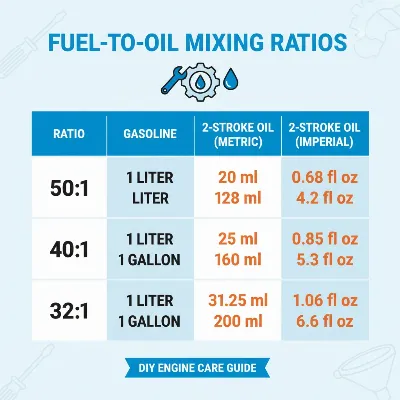 A detailed chart illustrating different 2-stroke fuel mixing ratios for pole saws, showing gas to oil proportions in liters and gallons, with clear numerical values for various common ratios.
The Right Ingredients: Gasoline and 2-Stroke Oil Choices
Achieving the perfect fuel mix requires both the correct ratio and high-quality ingredients.
Gasoline Selection
Always use fresh, unleaded gasoline with a minimum octane rating of 87. Higher octane fuels offer no performance benefit for most pole saws and cost more. The most critical factor is ethanol content. Ethanol attracts moisture, which can lead to water absorption into the fuel, separating oil from gasoline, causing corrosion, gum buildup, and damage to the carburetor and rubber components.
Ideally, use ethanol-free gasoline (E0) if available. If not, ensure the gasoline contains no more than 10% ethanol (E10). Never use fuels with higher ethanol concentrations like E15 or E85, as they are highly detrimental to small 2-stroke engines. Consider adding a high-quality fuel stabilizer, especially if your fuel contains ethanol or if you plan to store the mixed fuel for more than a few weeks.
Choosing the Right 2-Stroke Oil
|
Our Picks for the Best Pole Saw in 2026
As an Amazon Associate I earn from qualifying purchases.
|
||
| Num | Product | Action |
|---|---|---|
| 1 | 12-Inch Chain, Pole Saw Attachment - Compatible with Weed Eater Snapper Craftsman Ryobi WORX Troy-Bilt, and Homelite Multi-Tool Hus 128LD |

|
| 2 | 36FT Pole Saw, Telescoping Tree Trimmer with 7-30FT Extension Pole, Manual Branches Pruner for Backyard, Blue |
|
| 3 | Pole Saw Bag Compatible with Dewalt/Worx/Greenworks/EGO Power+/Black+Decker Electric Telescoping Chainsaw, Cordless Power Saw Storage Case for Extension Tree Trimmer Attachment, Black&Yellow |
|
| 4 | SEESII 10-Inch 2-in-1 Cordless Pole Saw & Mini Chainsaw, 21V Battery Powered Brushless Electric Tree Trimmer with Extension Pole, 2×4000mAh Batteries, Automatic Oiling,Handheld Pruner |
|
| 5 | Pole Saw Attachment + Extension Pole Attachment Compatible with 125LDx 128DJx 128LDx 323LD 324LDx 325LDx 326LDx and 327LDx power head or trimmer head Silvery PA1100 575261201 |
|
| 6 | Fiskars 15" Replacement Saw Blade, Woodzig Chainsaw Tooth, Compatible Models 9300/9261/TP45, Silver |
|
| 7 | Greenworks 8-Inch 40V Pole Saw Attachment PS40A00 |
|
| 8 | Electric 2-in-1 Cordless Pole Saw & 6" Chainsaw, Brushless Pruning Saw with 3.0Ah Battery, 15-Foot Reach Extendable Tree Trimmer for High Branch Pruning & Limb Cutting |
|
| 9 | Kerlista Replacement Pole saw Attachment compatible with Weed Eater Snapper dewalt Craftsman Ryobi John Deere Worx Troy-Bilt and Homelite multi-tool Hus 28LD Power head Black |
|
| 10 | Kerlista Replace part Pole saw attachment + Extension Pole Attachment compatible with Hus 128LD most brushcutters head and Powerheads (Black) |
|
Do not use automotive engine oil (e.g., 5w-30 or 10w-40) in your 2-stroke pole saw. These oils are formulated differently and are not designed to burn cleanly with gasoline, leading to excessive smoke, carbon buildup, and engine damage. You need specific 2-stroke engine oil.
Two-stroke oils are typically categorized into three main types:
- Conventional (Mineral-Based) Oils: Generally more affordable but may leave more residue as they burn. Suitable for occasional use.
- Semi-Synthetic Blends: Offering a balance between cost and performance, these provide better combustion cleanliness than conventional oils.
- Full Synthetic Oils: The premium choice, providing superior lubrication, minimal smoke, and significantly reduced carbon deposits. Full synthetics are ideal for high-performance engines or frequent use.
Look for oils that meet industry standards such as JASO FD, ISO-L-EGD, or API TC. These certifications indicate the oil’s quality and its ability to protect high-performance, air-cooled 2-stroke engines. Reputable brands like Stihl HP Ultra, Husqvarna XP, Echo Red Armor, and Amsoil Saber Professional are widely recommended.
Step-by-Step DIY Fuel Mixing Guide
Mixing fuel for your pole saw is a straightforward process when done correctly. Precision and safety are key.
Essential Tools and Supplies:
- Fresh, unleaded gasoline (87 octane, max 10% ethanol or ethanol-free)
- High-quality 2-stroke engine oil (JASO FD, ISO-L-EGD, or API TC rated)
- A clean, airtight, fuel-rated container (plastic or metal)
- An accurate measuring device for oil (measuring jug, syringe, or pre-measured oil bottle)
- Funnel (optional, for spill-free pouring)
- Gloves and eye protection
Mixing Instructions:
- Prepare Your Container: Use a dedicated fuel can, clearly marked “2-Stroke Mix.” Never use a container that has previously held other liquids like food or chemicals. Ensure it is clean and free of debris.
- Add Half the Gasoline: Pour approximately half of the total desired amount of gasoline into your mixing container. This helps ensure the oil thoroughly mixes with the fuel rather than settling at the bottom.
- Measure and Add Oil: Using your precise measuring tool, carefully measure the exact amount of 2-stroke oil required for your desired ratio and total fuel volume. Pour the entire amount of oil into the container.
- Initial Shake: Secure the cap tightly on the container and gently shake it for about 30-60 seconds to thoroughly blend the oil and gasoline. This initial mixing is crucial for proper lubrication.
- Add Remaining Gasoline: Carefully open the container and pour in the rest of the gasoline until you reach your desired total volume.
- Final Shake: Re-secure the cap and shake the container again for another 30 seconds to ensure a complete and uniform mixture.
- Label: Clearly label your fuel can with the mixing ratio (e.g., “50:1 Pole Saw Mix”), the date it was mixed, and the type of oil used. This prevents accidental use in other equipment and helps track its freshness.
> “Precision in fuel mixing isn’t just about performance; it’s about protecting your investment. The right blend extends engine life, while the wrong one can lead to premature failure.” – Johnathan Reed, Small Engine Technician
Fuel Storage and Longevity: Keeping Your Mix Fresh
Even a perfectly mixed fuel can degrade over time, especially if not stored properly. The shelf life of mixed 2-stroke fuel is a critical consideration for maintaining your pole saw’s performance.
Shelf Life Guidelines:
- General Rule: Mixed fuel, particularly if it contains ethanol, should ideally be used within 30 days of mixing.
- Ethanol-Free Fuel: If you use ethanol-free gasoline and a fuel stabilizer, the mixed fuel may last longer, potentially up to 3-6 months, or even up to a year in optimal conditions.
- Engine vs. Container: Fuel stored inside the pole saw’s tank degrades faster due to exposure to air and varying temperatures. It’s best practice to drain the fuel tank if you don’t plan to use the saw for more than 2-4 weeks.
Optimal Storage Conditions:
- Airtight Container: Always use a clean, sealed, and fuel-rated container designed for gasoline storage. This minimizes evaporation and prevents moisture absorption.
- Cool and Dark Place: Store the container in a cool, dry, and dark location, away from direct sunlight, heat sources, and open flames. Temperature fluctuations can accelerate fuel degradation.
- Avoid Overfilling: Leave a small air gap in the container to allow for fuel expansion, especially in warmer temperatures.
Signs of Bad Fuel:
- Unusual Odor: Fresh gasoline has a distinct smell. If your mixed fuel has a sour or varnish-like odor, it has likely gone bad.
- Cloudy or Separated Appearance: If the fuel looks cloudy, contains particulates, or if the oil appears to have separated from the gasoline, it’s no longer good for your engine.
- Engine Performance Issues: Difficult starting, rough idling, reduced power, or excessive smoke can all be indicators of stale or improperly mixed fuel.
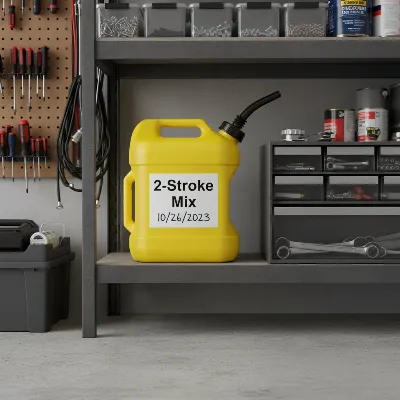 A clearly labeled fuel can for 2-stroke mix, stored in a cool, dry garage environment, emphasizing safe and proper fuel storage for pole saws.
Common Mistakes and Troubleshooting
Even with the best intentions, mistakes can happen. Knowing what to avoid and how to react can save your pole saw from damage.
Common Mixing Errors:
- Ignoring the Manual: The most frequent mistake is not checking the manufacturer’s recommended ratio. Always verify the correct ratio for your specific pole saw model.
- Guessing the Ratio: Eyeballing or approximating measurements is a recipe for disaster. Always use accurate measuring tools.
- Using the Wrong Oil Type: As mentioned, never use 4-stroke engine oil in a 2-stroke engine.
- Using Old or Unstable Gasoline: Ethanol-heavy or stale gasoline will cause problems, even with the correct oil mix.
- Incorrect Mixing Order: While not as critical as the ratio, adding oil first to half the gas, then the rest of the gas, ensures better dispersion.
Troubleshooting Fuel-Related Issues:
If your pole saw isn’t running optimally, the fuel mix is often the first place to check:
- Excessive Smoke (especially blue/gray): Likely indicates too much oil in the mix (too rich) or old, degraded fuel.
- Lack of Power, Overheating, Engine Seizure: These are severe symptoms of too little oil (too lean), leading to insufficient lubrication. Stop using the saw immediately.
- Difficulty Starting, Fouled Spark Plug: Can be caused by either too much oil, incorrect carburetor settings, or stale fuel.
- Engine Surging or Dying: Often a sign of stale fuel or water contamination, especially if ethanol-blended gasoline was used.
If you suspect bad fuel, drain the tank completely, dispose of the old fuel responsibly, and refill with a fresh, correctly mixed batch. Clean or replace the spark plug if it’s fouled, and consider inspecting or cleaning the carburetor if problems persist.
Conclusion
Mastering the art of mixing gas and oil for your 2-stroke pole saw is a fundamental DIY skill that directly impacts the life and performance of your tool. By understanding the critical role of lubrication, adhering to precise mixing ratios, selecting the right quality of gasoline and 2-stroke oil, and practicing safe storage, you empower yourself to keep your pole saw running smoothly and reliably for years to come. A few extra moments of care in the workshop translate to countless hours of trouble-free trimming in the garden. What’s your go-to method for ensuring your pole saw’s fuel is always perfectly mixed?
Frequently Asked Questions
What happens if I use the wrong gas-to-oil ratio?
Using too little oil (a lean mix) will cause your engine to overheat, leading to excessive wear and potential seizure due to insufficient lubrication. Using too much oil (a rich mix) will result in excessive smoke, carbon buildup on the spark plug and exhaust, reduced power, and eventually a fouled spark plug, making the engine difficult to start or run.
Can I use car oil or motorcycle oil in my 2-stroke pole saw?
No, absolutely not. Car or motorcycle oils are formulated for 4-stroke engines and contain detergents and additives that are not designed to burn cleanly in a 2-stroke engine. Using them will lead to severe carbon buildup, engine damage, and ultimately, engine failure. Always use specific 2-stroke engine oil with the appropriate JASO or API ratings.
How do I dispose of old or bad mixed fuel?
Never pour old fuel down drains, on the ground, or into trash cans. It is a hazardous waste and must be disposed of properly. Contact your local waste management facility, household hazardous waste collection sites, or a certified auto repair shop to inquire about safe disposal methods in your area.
Is it okay to use premium (higher octane) gasoline?
While you can use higher octane gasoline, it typically offers no real benefit for most 2-stroke pole saw engines that are designed for regular 87 octane fuel. It will not improve performance or increase engine life, and you will simply be paying more for no added value. Stick to the octane rating recommended in your owner’s manual.
Frequently Asked Questions
What are the consequences of using an incorrect gas-to-oil ratio?
Using too little oil (a lean mix) causes engine overheating, excessive wear, and potential seizure due to insufficient lubrication. Conversely, too much oil (a rich mix) leads to excessive smoke, carbon buildup on the spark plug and exhaust, reduced power, and a fouled spark plug, making the engine difficult to start or run.
Can automotive engine oil be used in a 2-stroke pole saw?
No, automotive engine oils (like 5w-30 or 10w-40) are formulated for 4-stroke engines and contain detergents not designed to burn cleanly in a 2-stroke engine. Using them will cause severe carbon buildup, engine damage, and ultimately, engine failure. Always use specific 2-stroke engine oil with appropriate JASO FD, ISO-L-EGD, or API TC ratings.
What is the proper way to dispose of old or bad mixed fuel?
Old or bad mixed fuel is hazardous waste and must never be poured down drains, on the ground, or into trash cans. Contact your local waste management facility, household hazardous waste collection sites, or a certified auto repair shop to inquire about safe and legal disposal methods in your area.
Is it beneficial to use premium or higher octane gasoline in a pole saw?
Using higher octane gasoline, such as premium fuel, typically offers no real benefit for most 2-stroke pole saw engines designed for regular 87 octane fuel. It will not improve performance or increase engine life, and you will simply pay more for no added value. Stick to the octane rating recommended in your owner's manual.
How long can mixed 2-stroke fuel be stored before it goes bad?
Mixed 2-stroke fuel, especially if it contains ethanol, should ideally be used within 30 days of mixing. If you use ethanol-free gasoline and a fuel stabilizer, the mixed fuel may last longer, potentially up to 3-6 months, or even up to a year under optimal storage conditions in an airtight container.

Good info overall, especially the part about engine damage from incorrect ratios. My only minor complaint is that it didn’t really touch on specific oil brands to look for, which would have been a nice addition. Still, it’s a solid guide for anyone needing to mix fuel for their pole saw. I’ll be more careful with my measurements going forward.
I used to just eyeball my fuel mix, which I now realize was a terrible idea after reading about the importance of precise ratios for 2-stroke engines. This guide really helped me understand why the lubrication aspect is so critical. My pole saw is definitely running smoother now that I’m actually measuring everything out correctly. Thanks for the clear instructions!
I’ve always been a bit intimidated by mixing fuel, but this guide broke it down perfectly. The emphasis on preventing premature wear and overheating really hit home for me, as I want my tools to last. My pole saw feels like it has more power and is definitely less smoky since I started using the proper blend. Highly recommend following these tips.
This was super helpful for getting my old pole saw back in action. I was having trouble with it sputtering, and I suspect my previous fuel mix was off. The explanation about how 2-stroke engines lack an internal oil system made a lot of sense. I followed the steps for a 50:1 ratio and it’s been working great ever since. Wish I’d known this sooner!