Dealing with a pole saw that repeatedly pinches and gets stuck in branches is a common frustration for many DIY enthusiasts and seasoned gardeners alike. This aggravating issue not only slows down your pruning work but can also damage your equipment and, more importantly, create hazardous situations. Understanding why your pole saw pinches and implementing proven techniques can transform a challenging chore into a smooth and efficient task, ensuring safer and more effective branch removal every time.
Understanding Why Your Pole Saw Pinches
Pole saw pinching primarily occurs due to the dynamic forces of compression and tension within a branch as you cut. When wood fibers are compressed, they push inward, while tensioned fibers pull apart. If you cut into an area where the branch’s weight causes the wood to compress onto your saw, the kerf—the gap created by the blade—can close, effectively clamping down on the bar and chain. This is particularly prevalent when a branch sags or shifts its weight during the cut, creating immense pressure on the saw.
The Physics of Pinching: Compression and Tension
The root cause of a pinched pole saw often lies in misunderstanding how gravity and a branch’s weight affect its internal stresses. As you begin a cut, the branch’s weight can create a pivot point, leading to compression on the top side of the cut and tension on the bottom, or vice versa depending on how the branch is supported. When your saw encounters the compression side without adequate relief, the wood fibers squeeze together, binding the bar. This effect is especially pronounced when attempting to cut upward into a branch, as gravity actively works to close the cut on the blade. For browse all reviews articles on this site.
Common Culprits: Dull Chains and Incorrect Technique
Beyond the physics of wood, several operational factors significantly contribute to saw pinching. A dull chain is a major offender; it requires more force to cut, generates excessive friction, and produces messy, uneven cuts. This slower, less efficient cutting action gives the branch more time to shift and bind the saw. Furthermore, improper cutting angles and the omission of critical relief cuts are frequently cited as the leading causes of pole saw jams. Uneven sharpening of the chain, where one side is sharper than the other, can also cause the saw to pull to one side, exacerbating the pinching problem.
Essential Cutting Techniques to Prevent Pinching
Preventing your pole saw from pinching is largely about employing smart cutting techniques that anticipate and counteract the natural forces within the branch. By making preliminary cuts, managing the branch’s weight, and ensuring your blade remains clear, you can achieve cleaner, safer cuts.
Mastering the Three-Cut Method for Larger Branches
For branches larger than a few inches in diameter, the three-cut method is indispensable for preventing pinching and bark tearing, while also protecting the tree’s health.
- First Cut (Undercut): Begin by making a shallow cut on the underside of the branch, approximately one-third of the way through. Position this cut a few inches away from the branch collar (the swollen area where the branch meets the main trunk). This crucial undercut prevents the bark from peeling down the trunk when the main weight of the branch is removed.
- Second Cut (Top Cut): Move a few inches further out from your undercut (away from the trunk) and make a complete cut from the top of the branch. This cut will remove the bulk of the branch’s weight, allowing it to fall cleanly without binding your saw. The branch will break free between the first and second cuts, leaving a stub.
- Third Cut (Final Cut): Once the main weight is gone, you’re left with a lighter stub. Make your final, clean cut just outside the branch collar. This precise cut promotes proper healing for the tree and minimizes the risk of disease or decay.
> “Improper cutting angles and lack of relief cuts are the number one cause of stuck saws. It’s avoidable with the right technique.” – Andrew Beck, Arborist and Founder of SafeTree Trimming Co.
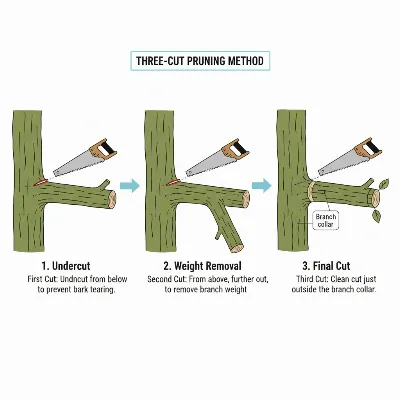 Illustration of the three-cut method for pruning a large branch with a pole saw, showing the undercut, top cut, and final cut positions on a tree branch.
Strategic Cutting Angles and Positions
Your approach to the branch significantly impacts whether your saw will pinch. Always position yourself to the side of the branch you are cutting, never directly underneath, to avoid falling debris and to gain better leverage. Hold the pole saw at a slight angle to the branch, starting with slow, controlled strokes. This allows the blade to establish a groove before you apply more pressure. Avoid vertical cuts from directly below, as this maximizes the chance of the branch closing on the blade due to gravity. Instead, use the saw’s weight to your advantage, letting it do the work rather than forcing it.
Managing Branch Weight and Tension
Successfully preventing pinching also involves understanding how to manage the branch’s inherent weight and tension. Before cutting, take a moment to assess the branch’s natural sag or tension points. If a branch is heavily weighted and bowing, it will have significant compression on the top and tension on the underside. Starting your cut strategically on the compression side can help. For very large or difficult branches, especially those under extreme tension (known as “spring poles”), consider using wedges. These tools can be tapped into the cut as you go, helping to keep the kerf open and prevent the wood from binding your saw. This approach is common in professional arboriculture and can be adapted for DIY use with caution.
Pole Saw Maintenance for Smooth Operation
Just as critical as proper cutting technique is consistent maintenance of your pole saw. A well-maintained saw performs more efficiently, reduces the risk of pinching, and extends the life of your tool.
The Importance of a Sharp and Properly Tensioned Chain
A sharp pole saw chain is your best defense against pinching. A sharp chain glides through wood with minimal effort, reducing friction and the likelihood of the cut closing on the bar. Conversely, a dull chain struggles to cut, forcing you to apply more pressure, which increases friction and heat, making pinching almost inevitable. Regularly inspect your chain for sharpness and sharpen it as needed, paying close attention to consistent angles and depth gauges to ensure even cutting. Additionally, proper chain tension is vital; a chain that is too loose can derail or cause poor cutting, while one that is too tight can cause excessive wear and overheating, both increasing the risk of binding. Refer to your pole saw’s manual for specific instructions on checking and adjusting chain tension.
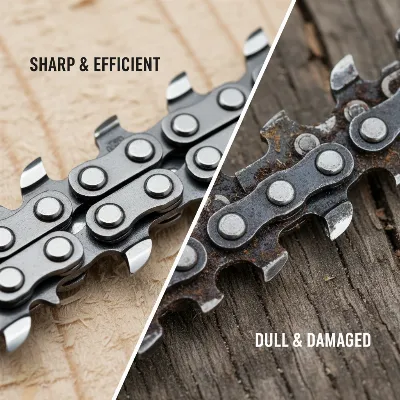 Close-up comparison of a sharp and a dull pole saw chain, highlighting the teeth for effective cutting and worn areas.
Regular Lubrication and Inspection
Adequate lubrication of the guide bar and chain is essential to minimize friction and heat buildup during operation. Always ensure your pole saw’s oil reservoir is filled with the correct bar and chain oil before each use. This constant lubrication allows the chain to move smoothly around the bar, significantly reducing the chances of binding. Beyond oiling, a thorough inspection of your pole saw before each use is crucial. Check the guide bar for any signs of bending, burrs, or wear, as a damaged or crooked bar can cause the chain to track improperly and lead to pinching. Ensure all bolts and fasteners are secure, and that the pole extension mechanisms lock firmly in place. Addressing minor issues proactively can prevent larger problems and ensure your saw is always ready for safe, efficient cutting.
Safety First: Preventing Accidents When a Saw Pinches
Even with the best techniques and maintenance, a pole saw can occasionally get stuck. Knowing how to react safely is paramount to preventing injury or further damage to your equipment.
Personal Protective Equipment (PPE) Essentials
Prioritizing safety starts before you even power up your pole saw. Always wear appropriate personal protective equipment (PPE), which should include a hard hat to protect against falling debris, safety goggles or a face shield for eye protection, and hearing protection like ear muffs, especially with gas-powered models. Heavy-duty work gloves provide a firm grip and protect your hands, while sturdy, non-slip boots (preferably steel-toed) offer foot protection and stable footing. Wearing long pants and snug-fitting sleeves also helps protect against scratches and minor cuts.
Safe Operating Practices
Maintaining stable footing on even ground is fundamental to safe pole saw operation. Avoid working on ladders or in unstable positions. Keep a clear perimeter around your work area, ensuring no bystanders, children, or pets are present, and always be aware of potential hazards like power lines. A firm, two-handed grip on the pole saw is critical for control, especially if the saw experiences kickback or binds. When starting a cut, begin with a lower throttle until a groove is established, then increase speed, never forcing the cut. Be constantly aware of the branch’s movement and where it will fall, positioning yourself off to the side, not directly beneath.
What to Do If Your Pole Saw Gets Stuck
If your pole saw binds in a branch, the most important rule is to remain calm and avoid panicking. Immediately turn off the engine or motor and wait for all moving parts to stop completely. Do not yank or forcefully pull the saw, as this can damage the chain, bar, or the pole itself, and potentially cause serious injury if it suddenly breaks free.
Instead, assess the situation. Can you gently wiggle the saw to relieve pressure? Sometimes a slight shift in the branch’s weight or a light nudge with another long tool (if safe to do so) can create enough space for the blade to slide out. If the saw is deeply pinched, you may need to use another saw (like a hand saw) to make a relief cut on the branch, further out from your stuck pole saw, to remove some of the weight causing the bind. Always work cautiously and prioritize your safety during this process. Once the saw is free, inspect it thoroughly for any damage before resuming work.
Conclusion
Preventing your pole saw from pinching in branches is a skill that combines proper technique, consistent maintenance, and a strong commitment to safety. By understanding the forces of compression and tension, mastering the three-cut method for larger branches, and ensuring your chain is always sharp and well-lubricated, you can significantly reduce the likelihood of frustrating jams. Always prioritize wearing appropriate PPE, maintaining a safe working environment, and knowing how to safely address a stuck saw. Embracing these DIY strategies will not only make your pruning tasks more efficient and less stressful but will also contribute to the longevity of your tools and, most importantly, your personal safety. What steps will you take today to make your pole saw pruning experience smoother and safer?
Frequently Asked Questions
Why does my pole saw keep getting stuck?
Your pole saw often gets stuck due to the branch’s weight creating compression on the blade, known as pinching. This is exacerbated by dull chains, improper cutting angles, or not using relief cuts, especially on larger branches.
What is the three-cut method for pruning?
The three-cut method is a pruning technique for larger branches that involves making an undercut, followed by a top cut further out to remove the branch’s weight, and finally a clean cut near the branch collar to prevent bark tearing and pinching.
How often should I sharpen my pole saw chain?
The frequency of sharpening depends on usage, but a good rule of thumb is to sharpen your chain whenever you notice it cutting slowly, producing sawdust instead of chips, or requiring excessive force. Regular sharpening prevents pinching and improves efficiency.
Is it safe to pull a stuck pole saw free?
No, it is not safe to forcefully pull a stuck pole saw free. This can damage the saw and cause injury if the branch or saw suddenly releases. Always turn off the saw, assess the situation calmly, and if necessary, use another tool to relieve the pressure safely.
