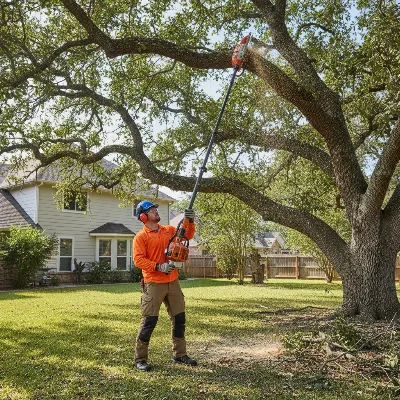
Few things are as frustrating as a gas pole saw that refuses to start, especially when you have a day’s worth of trimming ahead. Often, the culprit is a flooded engine – a common issue that can halt your outdoor projects. But don’t despair! Understanding why your pole saw floods and knowing the right steps to quickly unflood it can save you time, effort, and a trip to the repair shop. This comprehensive guide will walk you through the causes, signs, and effective methods to get your gas pole saw running smoothly again, ensuring your garden maintenance stays on track.
What is a Flooded Gas Pole Saw Engine and Why Does it Happen?
A flooded gas pole saw engine occurs when too much fuel enters the combustion chamber, overwhelming the spark plug’s ability to ignite the air-fuel mixture. Instead of a fine mist, you end up with liquid fuel coating the spark plug, making ignition impossible. This common issue primarily affects two-stroke engines, which are prevalent in pole saws, and can stem from several factors related to operation and maintenance.
One primary cause is over-choking. The choke enriches the fuel mixture for cold starts, but leaving it on for too long or using it when the engine is already warm will flood the engine with excess fuel. Similarly, over-priming the engine by repeatedly pressing the primer bulb can force an excessive amount of fuel into the carburetor and cylinder. A dirty or faulty spark plug with carbon buildup or one that’s simply worn out can fail to produce a strong enough spark to ignite the fuel, leading to fuel accumulation. Furthermore, carburetor issues such as a stuck needle valve, clogged jets, or improper idle settings can disrupt the precise air-to-fuel ratio, causing the engine to run too rich and flood. Even using an improper fuel mixture (too much oil) or old, stale fuel can contribute to flooding by burning inefficiently or leaving residues that hinder combustion. Finally, underlying mechanical issues like low engine compression due to a scored piston can prevent proper fuel burning and lead to flooding.
Recognizing a Flooded Pole Saw: Key Signs to Look For
Identifying a flooded engine quickly is the first step towards resolving the problem. Your pole saw will often exhibit several tell-tale signs that indicate an excess of fuel in the combustion chamber. Paying attention to these clues can prevent further frustration and potential damage.
The most obvious sign is a strong smell of fuel around the engine, particularly near the exhaust or spark plug area. If you remove the spark plug and find it wet or soaked in fuel, this is a definitive indicator of a flooded engine, as a wet plug cannot spark properly. Another common symptom is when the engine won’t start after multiple pulls of the starter cord, especially if you’ve been persistent with the choke engaged. You might also hear the engine popping or sputtering but failing to fully ignite, suggesting it’s trying to fire but is overwhelmed by fuel. In severe cases, you may even observe excessive smoke puffing out or raw fuel dripping from the exhaust or carburetor. Additionally, if the starter cord feels unusually harder to pull than usual, the resistance can be caused by too much liquid fuel in the cylinder.
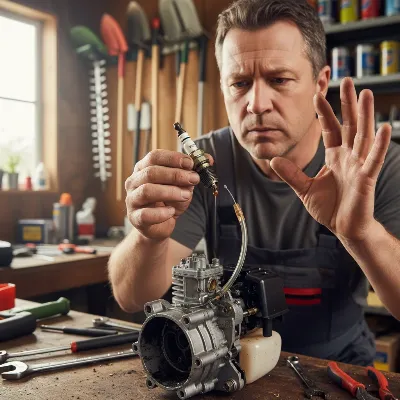 Inspecting a flooded gas pole saw engine with a strong fuel smell and wet spark plug.
Immediate Action: Unflooding Your Pole Saw Without Tools
Sometimes, you can unflood your pole saw with a few simple steps, often without needing any special tools. This method focuses on maximizing airflow and expelling excess fuel from the cylinder. It’s a quick and often effective first attempt before resorting to more involved procedures.
First, turn off the choke immediately if it is engaged. Keeping the choke on will only continue to add more fuel to an already flooded engine, exacerbating the problem. Next, move the ignition switch to the “ON” position. Then, engage the throttle fully by holding it wide open. Many pole saw models allow you to lock the throttle in this position using a trigger or throttle lock. With the choke off and the throttle wide open, pull the starter cord 6 to 10 times firmly and smoothly. The wide-open throttle allows maximum air to enter the engine, helping to dilute the rich fuel mixture and push the excess fuel out through the exhaust port. You might smell more fuel during this process, which is normal as the engine clears itself. After several pulls, release the throttle and attempt to start the engine normally, following your manufacturer’s recommended starting procedure for a warm engine.
Step-by-Step Guide: Unflooding Your Gas Pole Saw Engine with Tools
If the no-tool method doesn’t work, you’ll need to get a bit more hands-on. This process involves removing and drying the spark plug, which is often coated in fuel when the engine is flooded. This method is highly effective for severe flooding.
Safety First: Before you begin, always ensure the ignition switch is in the “OFF” position and the engine is cool. Wear appropriate safety gloves to protect your hands from fuel and hot components.
- Disconnect the Spark Plug Wire: Carefully pull the rubber boot and wire away from the spark plug terminal.
- Remove the Spark Plug: Use a correctly sized spark plug wrench to unscrew the spark plug from the cylinder head. Turn it counter-clockwise until it’s loose, then remove it by hand.
- Clear the Cylinder: With the spark plug removed, pull the starter cord slowly and deliberately 10 to 15 times. This action cycles the piston, expelling excess liquid fuel out of the open spark plug hole. You might visibly see a mist or liquid fuel escaping, so be mindful of where this fuel is directed.
- Inspect and Dry the Spark Plug: Examine the removed spark plug. If it’s wet with fuel or covered in black, sooty residue, it’s a clear sign of flooding. Use a clean, dry rag to wipe the plug electrodes completely dry. You can also allow it to air dry for a few minutes. Some professionals suggest gently burning off fuel residues with a lighter (exercising extreme caution and away from any fuel fumes), but drying it thoroughly is usually sufficient. If the plug looks severely fouled or damaged, consider replacing it.
- Clean the Air Filter (Optional but Recommended): While the engine is open, it’s a good time to check your air filter. If it’s dirty, remove it and clean it according to your pole saw’s manual (e.g., wash foam filters, replace paper filters). A clean filter ensures maximum airflow.
- Reinstall the Spark Plug: Carefully screw the dried (or new) spark plug back into the cylinder head by hand to avoid cross-threading. Once finger-tight, use the spark plug wrench to tighten it to the correct torque specification (refer to your manual for exact torque). Do not overtighten.
- Reconnect the Spark Plug Wire: Push the spark plug wire boot firmly back onto the spark plug terminal until it clicks securely into place.
- Attempt to Start: Set the choke control to the “OFF” or “RUN” position and ensure the throttle is in the “RUN” position (often a fast idle setting). Pull the starter cord quickly and forcefully, but without jerking. It may take a few pulls for the engine to clear any remaining rich mixture.
- Warm-Up: Once the engine starts, let it run for a full minute at idle or a light throttle setting. This allows the motor to warm up and ensures any residual fuel is fully burned off before you begin cutting.
Essential Tools for Unflooding and Maintenance
Having a few basic tools on hand can make the unflooding process and general maintenance much easier. You don’t need a full workshop, but these items are crucial for any gas pole saw owner:
- Spark Plug Wrench: This is indispensable for removing and reinstalling the spark plug. Ensure it’s the correct size for your pole saw’s plug.
- Clean Rags: For wiping down the spark plug, cleaning spills, and general maintenance.
- New Spark Plug (Optional): Keeping a spare, correctly gapped spark plug can be a lifesaver if your old one is fouled beyond cleaning or damaged.
- Air Filter Cleaner or Replacement (If applicable): For foam filters, a specialized cleaning solution; for paper filters, compressed air or a replacement.
- Screwdriver Set: Useful for accessing certain components like the air filter cover or carburetor adjustments if needed.
- Safety Gloves: To protect your hands from fuel, oil, and sharp components.
> “Understanding your pole saw’s cold start procedure, and strictly adhering to it, is the most powerful preventative measure against engine flooding. Patience and precision are your best tools.” – Expert Mechanic, Outdoor Power Equipment Specialist
Preventing Future Flooding: Best Practices for Your Pole Saw
Prevention is always better than cure. By adopting good habits and performing regular maintenance, you can significantly reduce the likelihood of your gas pole saw engine flooding again.
- Follow Proper Starting Procedures: Always refer to your pole saw’s owner’s manual for the exact cold start procedure. Avoid over-priming (typically 2-3 presses of the primer bulb are sufficient) and disengage the choke as soon as the engine sputters or attempts to fire. Never keep pulling the cord with the choke on after the first few pulls or if the engine is already warm.
- Maintain Your Spark Plug: Regularly inspect, clean, and gap your spark plug. Carbon buildup can insulate the electrodes, weakening the spark. Replace the spark plug annually or at the first signs of wear or persistent fouling. A clean, correctly gapped spark plug is vital for efficient combustion.
- Clean Your Air Filter: A clogged air filter restricts airflow, leading to a rich fuel mixture that can cause flooding. Clean your air filter frequently, especially after dusty work, and replace it regularly according to the manufacturer’s recommendations.
- Use Fresh, Correct Fuel Mixture: Always use fresh gasoline and the correct oil-to-gasoline ratio specified for your two-stroke engine. Old gasoline can degrade, causing starting problems and carburetor issues. Consider using fuel stabilizers if you store fuel for extended periods, or pre-mixed, ethanol-free fuels for optimal performance and longevity.
- Proper Carburetor Adjustment: If your pole saw frequently floods despite following correct starting procedures, the carburetor’s idle mixture might be set too rich. This often requires professional adjustment, but checking for obvious issues like a stuck choke linkage or dirty jets can be done at home.
- Drain Fuel for Storage: If you plan to store your pole saw for more than a month, drain all fuel from the tank and run the engine until it stops to clear the carburetor. This prevents fuel degradation and gumming up internal components, which can lead to flooding and other starting problems when you retrieve it.
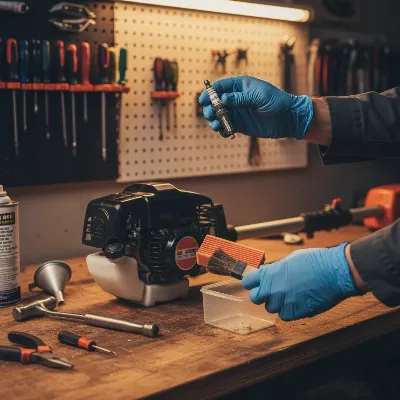 Regular preventative maintenance for a gas pole saw, including cleaning the spark plug and air filter.
Conclusion
A flooded gas pole saw engine can bring your garden work to a halt, but with the right knowledge and a few simple steps, you can quickly get it back in action. By understanding the common causes—from over-choking to a dirty spark plug—and recognizing the signs of flooding, you’re already halfway to a solution. Whether you opt for the quick, tool-free method or a more thorough spark plug removal, correctly unflooding your engine is a manageable task for any home gardener. More importantly, consistent preventative maintenance, including proper starting techniques, regular spark plug and air filter care, and using fresh, correct fuel, will keep your pole saw running reliably for years to come. What’s your go-to trick for keeping your pole saw running flawlessly?
Frequently Asked Questions
How long does it take for a flooded engine to clear itself?
|
Our Picks for the Best Pole Saw in 2026
As an Amazon Associate I earn from qualifying purchases.
|
||
| Num | Product | Action |
|---|---|---|
| 1 | Kerlista Replacement Pole saw Attachment compatible with Weed Eater Snapper dewalt Craftsman Ryobi John Deere Worx Troy-Bilt and Homelite multi-tool Hus 28LD Power head Black |

|
| 2 | 12-Inch Chain, Pole Saw Attachment - Compatible with Weed Eater Snapper Craftsman Ryobi WORX Troy-Bilt, and Homelite Multi-Tool Hus 128LD |
|
| 3 | SEESII 10-Inch 2-in-1 Cordless Pole Saw & Mini Chainsaw, 21V Battery Powered Brushless Electric Tree Trimmer with Extension Pole, 2×4000mAh Batteries, Automatic Oiling,Handheld Pruner |
|
| 4 | Kerlista Replace part Pole saw attachment + Extension Pole Attachment compatible with Hus 128LD most brushcutters head and Powerheads (Black) |
|
| 5 | Pole Saw Bag Compatible with Dewalt/Worx/Greenworks/EGO Power+/Black+Decker Electric Telescoping Chainsaw, Cordless Power Saw Storage Case for Extension Tree Trimmer Attachment, Black&Yellow |
|
| 6 | 36FT Pole Saw, Telescoping Tree Trimmer with 7-30FT Extension Pole, Manual Branches Pruner for Backyard, Blue |
|
| 7 | Greenworks 8-Inch 40V Pole Saw Attachment PS40A00 |
|
| 8 | Pole Saw Attachment + Extension Pole Attachment Compatible with 125LDx 128DJx 128LDx 323LD 324LDx 325LDx 326LDx and 327LDx power head or trimmer head Silvery PA1100 575261201 |
|
| 9 | Electric 2-in-1 Cordless Pole Saw & 6" Chainsaw, Brushless Pruning Saw with 3.0Ah Battery, 15-Foot Reach Extendable Tree Trimmer for High Branch Pruning & Limb Cutting |
|
| 10 | Fiskars 15" Replacement Saw Blade, Woodzig Chainsaw Tooth, Compatible Models 9300/9261/TP45, Silver |
|
A flooded engine typically clears itself within 10-15 minutes if left alone, as the excess fuel evaporates. However, actively following the unflooding steps can significantly speed up this process, getting your pole saw running much faster.
Can old gas cause a pole saw engine to flood?
Yes, old or stale gasoline can definitely cause flooding. Over time, gasoline can degrade and separate, leaving behind gummy residues that clog carburetor jets and prevent proper fuel atomization, leading to an overly rich mixture and flooding.
What should I do if my pole saw still won’t start after unflooding?
If your Pole Saw still doesn’t start after carefully following the unflooding steps, it might indicate a different underlying issue. Check for a strong spark (using a spark tester), ensure there’s proper fuel flow, and verify engine compression. If you’re unsure, it’s best to consult a qualified small engine mechanic.
Is it safe to try to burn off fuel from a spark plug with a lighter?
While some experienced users do this, it is generally not recommended due to the flammability of gasoline. A safer approach is to wipe the spark plug thoroughly dry with a clean cloth and allow it to air dry completely before reinstallation.
How often should I clean or replace my spark plug to prevent flooding?
It’s a good practice to inspect your spark plug every 25 hours of operation or annually. Clean it if it shows signs of carbon buildup and replace it if the electrodes are worn, damaged, or consistently fouled. Regular maintenance helps maintain a strong, consistent spark crucial for preventing flooding.