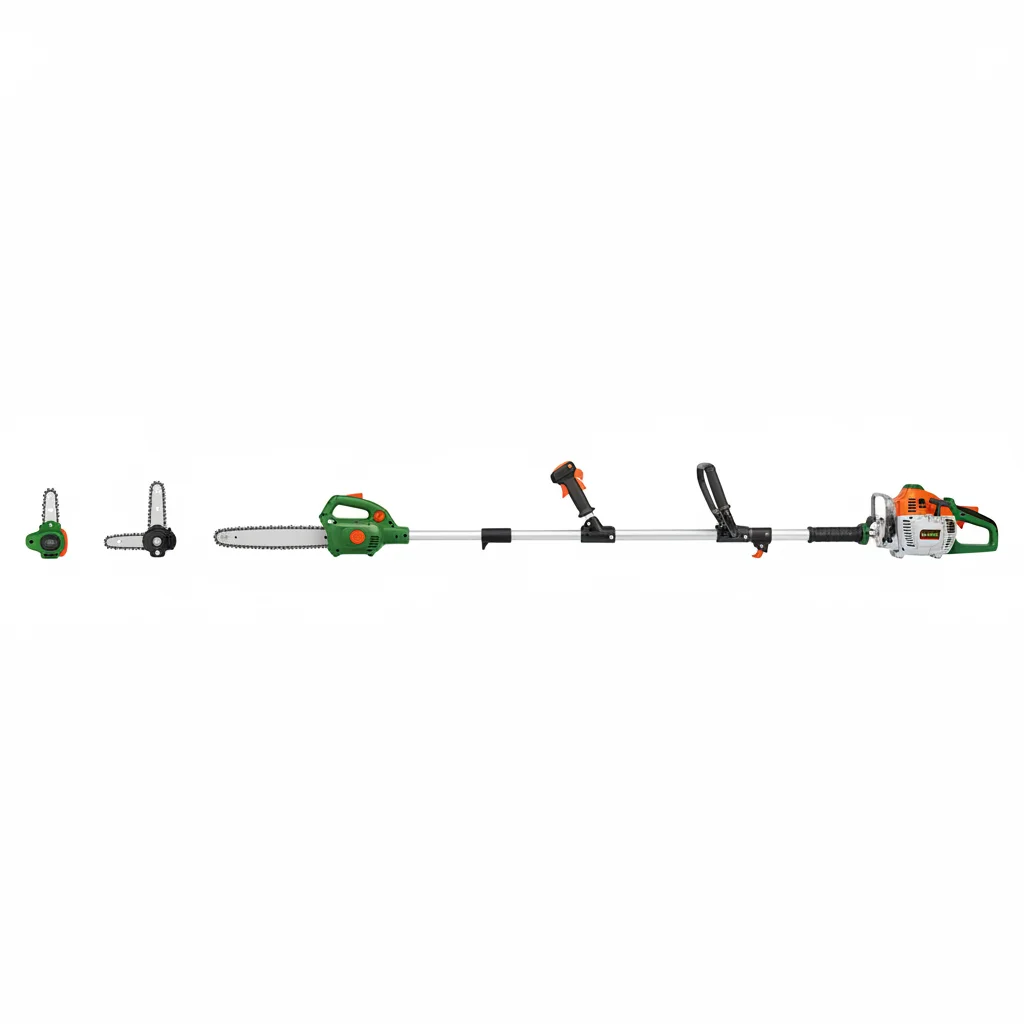
Choosing the correct pole saw bar length is crucial for efficient and safe pruning. For most homeowners tackling general yard work, a bar length between 8 and 10 inches is ideal. This range offers a good balance of maneuverability for smaller branches and sufficient cutting capacity for medium-sized limbs, typically up to 6 inches in diameter. Understanding your specific pruning tasks will help you determine if you need a shorter, more agile bar or a longer one for more substantial cuts.
Understanding Pole Saw Bar Lengths
The bar length of a pole saw refers to the usable cutting portion of the saw chain. Shorter bars, typically 6-8 inches, are excellent for precision work, light trimming, and navigating dense foliage without snagging. They are also lighter, reducing fatigue during extended use. Conversely, longer bars, ranging from 10-12 inches or more, are designed for cutting thicker branches and provide a greater reach, which can be beneficial for higher limbs. However, longer bars can be heavier and more challenging to control, especially for novice users.
Matching Bar Length to Branch Diameter
A general rule of thumb is to select a pole saw bar that is at least 2 inches longer than the diameter of the branch you intend to cut. For instance, if you frequently encounter branches that are 4 inches thick, an 8-inch bar would be a suitable minimum. Attempting to cut branches that are too thick for your bar can lead to pinching, kickback, and potential damage to the saw or injury to the operator. Always prioritize safety and ensure the bar can comfortably clear the branch in a single pass.
- 6-8 inch bar: Best for branches up to 4 inches in diameter, light trimming, and detailed work.
- 8-10 inch bar: Ideal for branches up to 6 inches in diameter, general yard maintenance, and moderate pruning.
- 10-12 inch bar: Suitable for branches up to 8 inches in diameter, heavier pruning tasks, and professional use.
- 12+ inch bar: Reserved for very thick branches and specialized applications, often requiring more powerful engines.
Considerations for Reach and Maneuverability
|
Our Picks for the Best Pole Saw in 2026
As an Amazon Associate I earn from qualifying purchases.
|
||
| Num | Product | Action |
|---|---|---|
| 1 | 36FT Pole Saw, Telescoping Tree Trimmer with 7-30FT Extension Pole, Manual Branches Pruner for Backyard, Blue |

|
| 2 | SEESII 10-Inch 2-in-1 Cordless Pole Saw & Mini Chainsaw, 21V Battery Powered Brushless Electric Tree Trimmer with Extension Pole, 2×4000mAh Batteries, Automatic Oiling,Handheld Pruner |
|
| 3 | Electric 2-in-1 Cordless Pole Saw & 6" Chainsaw, Brushless Pruning Saw with 3.0Ah Battery, 15-Foot Reach Extendable Tree Trimmer for High Branch Pruning & Limb Cutting |
|
| 4 | 12-Inch Chain, Pole Saw Attachment - Compatible with Weed Eater Snapper Craftsman Ryobi WORX Troy-Bilt, and Homelite Multi-Tool Hus 128LD |
|
| 5 | Fiskars 15" Replacement Saw Blade, Woodzig Chainsaw Tooth, Compatible Models 9300/9261/TP45, Silver |
|
| 6 | Pole Saw Bag Compatible with Dewalt/Worx/Greenworks/EGO Power+/Black+Decker Electric Telescoping Chainsaw, Cordless Power Saw Storage Case for Extension Tree Trimmer Attachment, Black&Yellow |
|
| 7 | Kerlista Replace part Pole saw attachment + Extension Pole Attachment compatible with Hus 128LD most brushcutters head and Powerheads (Black) |
|
| 8 | Pole Saw Attachment + Extension Pole Attachment Compatible with 125LDx 128DJx 128LDx 323LD 324LDx 325LDx 326LDx and 327LDx power head or trimmer head Silvery PA1100 575261201 |
|
| 9 | Kerlista Replacement Pole saw Attachment compatible with Weed Eater Snapper dewalt Craftsman Ryobi John Deere Worx Troy-Bilt and Homelite multi-tool Hus 28LD Power head Black |
|
| 10 | Greenworks 8-Inch 40V Pole Saw Attachment PS40A00 |
|
While a longer bar might seem advantageous for reach, it’s important to remember that the overall length of the pole saw, including the extension pole, dictates your maximum reach. A longer bar adds weight to the cutting head, which can make the pole saw feel top-heavy and more difficult to maneuver, especially when extended to its full length. For tasks requiring frequent repositioning or working in tight spaces, a shorter bar often provides better control and reduces strain. Always test the balance and feel of a pole saw before committing to a specific bar length.
Maintenance and Replacement of Pole Saw Bars
Proper maintenance of your pole saw bar is essential for its longevity and performance. Regularly clean the bar groove to remove sawdust and debris, and ensure the chain tension is correct. Over time, bars can wear, especially on the underside where most of the cutting occurs. Signs of wear include burrs, uneven rails, or a bent tip. Replacing a worn bar is a straightforward process and ensures consistent cutting performance and safety. Always refer to your pole saw’s manual for specific bar replacement instructions and recommended bar types.
Choosing the Right Bar for Different Tree Types
The type of trees you’re pruning can also influence your ideal bar length. For softwoods like pine or cedar, a shorter bar might suffice even for slightly thicker branches due to their easier cutting properties. However, for hardwoods such as oak or maple, which are denser and more challenging to cut, a slightly longer bar might be beneficial to ensure a clean, efficient cut without excessive strain on the saw’s motor. Consider the typical wood density in your pruning tasks when making your selection.

I bought a pole saw with a 12-inch bar thinking bigger was better for my property. While it handles thicker branches well, I’ve found it’s a bit cumbersome for the precision work around my fruit trees. It’s also heavier than I expected, which leads to more fatigue. Next time, I’ll probably opt for something in the 8-10 inch range for better balance and less strain.
This information was really helpful in choosing my first pole saw. I have a lot of dense foliage to navigate, so the recommendation for shorter bars (6-8 inches) for precision work was exactly what I needed. My new 6-inch saw is incredibly agile and makes quick work of light trimming without snagging. It’s also much lighter, which is a huge bonus for longer pruning sessions.
I’m a homeowner with a pretty average-sized yard, and I found the advice about the 8 to 10-inch bar length to be spot on. I went with an 8-inch model, and it’s been great for general yard work and trimming smaller branches. It’s super maneuverable, which is a big plus when you’re reaching high up. My only minor complaint is that for one or two thicker branches, I wished I had gone with the 10-inch.
I used to struggle with an old manual pole pruner, but after reading about bar lengths, I finally upgraded. The 10-inch bar on my new saw is perfect for the medium-sized limbs I deal with. It cuts through branches up to 6 inches like butter, making my yard work so much faster and less tiring. Definitely recommend paying attention to the bar length for your specific needs.