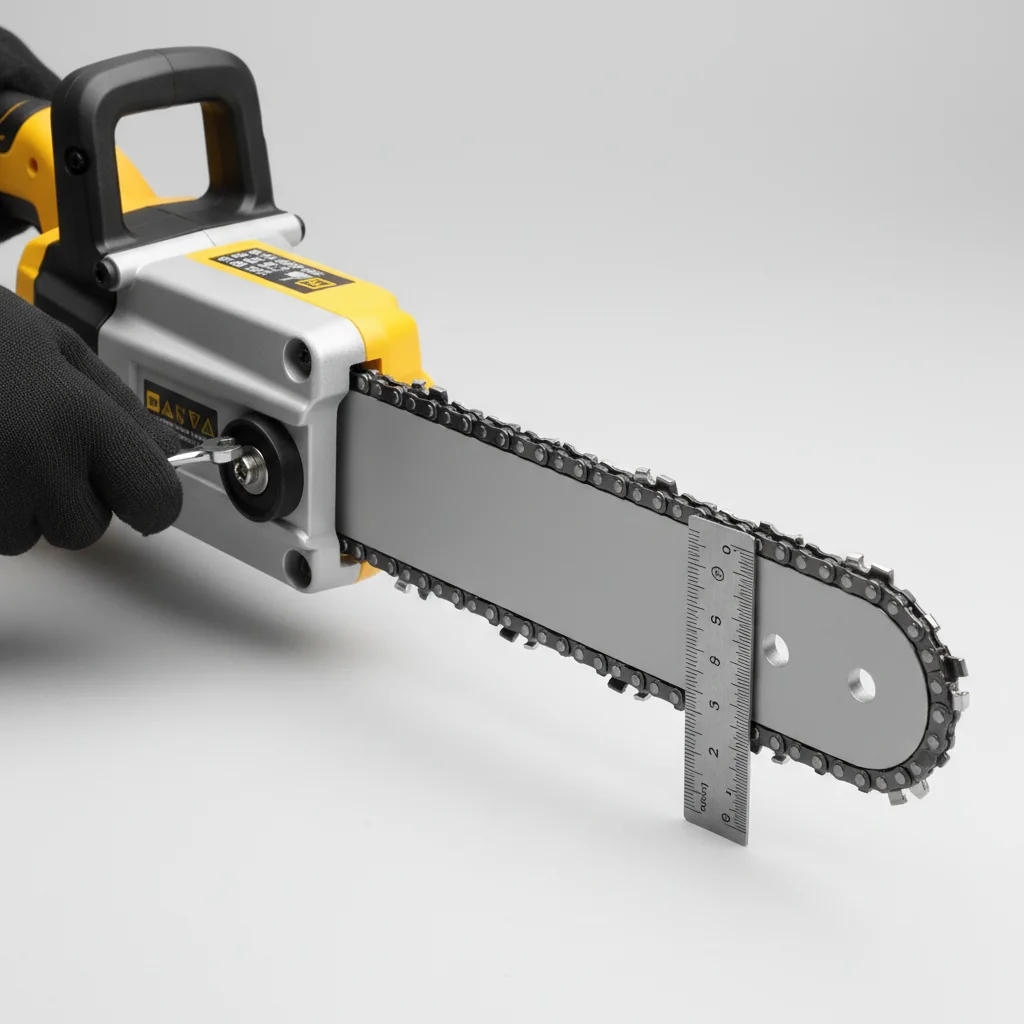
Proper pole saw chain tension is crucial for both safety and cutting efficiency. The chain should be tight enough that it doesn’t sag from the guide bar, but still loose enough to be pulled around the bar by hand with moderate effort. This typically means a slight gap, around 1/8 to 1/4 inch, between the chain and the bottom of the guide bar when lifted from the top.
Why Correct Chain Tension Matters
Incorrect chain tension can lead to several problems. A chain that is too loose can derail from the guide bar, causing damage to the saw and potentially injuring the operator. It can also lead to inefficient cutting, as the chain may not engage the wood properly. Conversely, a chain that is too tight will increase friction and wear on the guide bar, sprocket, and chain itself, leading to premature failure and overheating. This also puts unnecessary strain on the pole saw’s motor, reducing its lifespan and power output.
Checking Your Pole Saw Chain Tension
Before each use, and periodically during extended cutting sessions, you should check your pole saw’s chain tension. Ensure the saw is turned off and the battery or power cord is disconnected for safety. Wear protective gloves. Lift the chain from the top of the guide bar in the middle section. There should be a small gap, allowing the drive links to remain seated in the bar groove but with enough play for the chain to move freely. If the chain sags significantly or is difficult to move, adjustments are needed.
Adjusting Pole Saw Chain Tension
|
Our Picks for the Best Pole Saw in 2026
As an Amazon Associate I earn from qualifying purchases.
|
||
| Num | Product | Action |
|---|---|---|
| 1 | Kerlista Replacement Pole saw Attachment compatible with Weed Eater Snapper dewalt Craftsman Ryobi John Deere Worx Troy-Bilt and Homelite multi-tool Hus 28LD Power head Black |

|
| 2 | Kerlista Replace part Pole saw attachment + Extension Pole Attachment compatible with Hus 128LD most brushcutters head and Powerheads (Black) |
|
| 3 | 12-Inch Chain, Pole Saw Attachment - Compatible with Weed Eater Snapper Craftsman Ryobi WORX Troy-Bilt, and Homelite Multi-Tool Hus 128LD |
|
| 4 | 36FT Pole Saw, Telescoping Tree Trimmer with 7-30FT Extension Pole, Manual Branches Pruner for Backyard, Blue |
|
| 5 | Electric 2-in-1 Cordless Pole Saw & 6" Chainsaw, Brushless Pruning Saw with 3.0Ah Battery, 15-Foot Reach Extendable Tree Trimmer for High Branch Pruning & Limb Cutting |
|
| 6 | SEESII 10-Inch 2-in-1 Cordless Pole Saw & Mini Chainsaw, 21V Battery Powered Brushless Electric Tree Trimmer with Extension Pole, 2×4000mAh Batteries, Automatic Oiling,Handheld Pruner |
|
| 7 | Pole Saw Bag Compatible with Dewalt/Worx/Greenworks/EGO Power+/Black+Decker Electric Telescoping Chainsaw, Cordless Power Saw Storage Case for Extension Tree Trimmer Attachment, Black&Yellow |
|
| 8 | Fiskars 15" Replacement Saw Blade, Woodzig Chainsaw Tooth, Compatible Models 9300/9261/TP45, Silver |
|
| 9 | Greenworks 8-Inch 40V Pole Saw Attachment PS40A00 |
|
| 10 | Pole Saw Attachment + Extension Pole Attachment Compatible with 125LDx 128DJx 128LDx 323LD 324LDx 325LDx 326LDx and 327LDx power head or trimmer head Silvery PA1100 575261201 |
|
Most pole saws have a tensioning screw located near the guide bar. To adjust, first loosen the bar nuts or cover screws that hold the guide bar in place. Then, turn the tensioning screw clockwise to tighten the chain or counter-clockwise to loosen it. Make small adjustments and recheck the tension frequently. Once the desired tension is achieved, retighten the bar nuts or cover screws securely. Always refer to your pole saw’s owner’s manual for specific instructions, as designs can vary.
- Always ensure the pole saw is off and disconnected from power before making adjustments.
- Wear heavy-duty work gloves to protect your hands from sharp chain teeth.
- Make small, incremental adjustments to the tensioning screw.
- After tightening the bar nuts, recheck the tension one last time.
- Never operate a pole saw with a chain that is visibly loose or excessively tight.
Common Mistakes to Avoid
One common mistake is overtightening the chain, thinking it will prevent derailing. This only accelerates wear and can cause the chain to bind. Another error is neglecting to check tension after the first few cuts with a new chain, as new chains often stretch slightly. Always allow the chain to cool down before making final tension adjustments, as metal expands when hot and contracts when cool. Regular maintenance, including proper chain tension, will significantly extend the life and performance of your pole saw.For optimal performance, consider investing in a pole saw with an easy-to-access chain tensioning system, which simplifies this crucial maintenance task.
