A gas pole saw is an indispensable tool for maintaining tall trees and unruly bushes, making quick work of tasks that would otherwise require ladders or professional services. However, few things are as frustrating as pulling the starter cord repeatedly only for your reliable gas pole saw to remain stubbornly silent. A non-starting pole saw can bring your yard work to a screeching halt, but with a bit of DIY know-how, many common issues can be diagnosed and fixed quickly, saving you time and money. This guide will walk you through the essential troubleshooting steps to get your pole saw roaring back to life.
Understanding Your Gas Pole Saw: Key Components for Troubleshooting
Before diving into repairs, it’s helpful to understand the basic systems that allow your gas pole saw to start and run. At its core, a gas engine requires three things: fuel, air, and spark. Each of these components has several parts that must function correctly for ignition to occur. The fuel system includes the fuel tank, fuel lines, fuel filter, and carburetor, responsible for mixing fuel and air. The ignition system consists of the spark plug and ignition coil, creating the spark needed to ignite the fuel-air mixture. Finally, the air intake system relies on a clean air filter to ensure proper airflow to the carburetor. Understanding these interlinked systems is the first step toward effectively diagnosing why your pole saw might not be starting.
Common Reasons Your Gas Pole Saw Won’t Start
When your gas pole saw refuses to kick into action, it’s typically due to a problem within one of its core systems. Identifying the root cause is crucial for an effective fix.
Fuel-Related Issues
|
Our Picks for the Best Pole Saw in 2026
As an Amazon Associate I earn from qualifying purchases.
|
||
| Num | Product | Action |
|---|---|---|
| 1 | Kerlista Replace part Pole saw attachment + Extension Pole Attachment compatible with Hus 128LD most brushcutters head and Powerheads (Black) |

|
| 2 | Electric 2-in-1 Cordless Pole Saw & 6" Chainsaw, Brushless Pruning Saw with 3.0Ah Battery, 15-Foot Reach Extendable Tree Trimmer for High Branch Pruning & Limb Cutting |
|
| 3 | 12-Inch Chain, Pole Saw Attachment - Compatible with Weed Eater Snapper Craftsman Ryobi WORX Troy-Bilt, and Homelite Multi-Tool Hus 128LD |
|
| 4 | SEESII 10-Inch 2-in-1 Cordless Pole Saw & Mini Chainsaw, 21V Battery Powered Brushless Electric Tree Trimmer with Extension Pole, 2×4000mAh Batteries, Automatic Oiling,Handheld Pruner |
|
| 5 | Greenworks 8-Inch 40V Pole Saw Attachment PS40A00 |
|
| 6 | Kerlista Replacement Pole saw Attachment compatible with Weed Eater Snapper dewalt Craftsman Ryobi John Deere Worx Troy-Bilt and Homelite multi-tool Hus 28LD Power head Black |
|
| 7 | 36FT Pole Saw, Telescoping Tree Trimmer with 7-30FT Extension Pole, Manual Branches Pruner for Backyard, Blue |
|
| 8 | Pole Saw Bag Compatible with Dewalt/Worx/Greenworks/EGO Power+/Black+Decker Electric Telescoping Chainsaw, Cordless Power Saw Storage Case for Extension Tree Trimmer Attachment, Black&Yellow |
|
| 9 | Fiskars 15" Replacement Saw Blade, Woodzig Chainsaw Tooth, Compatible Models 9300/9261/TP45, Silver |
|
| 10 | Pole Saw Attachment + Extension Pole Attachment Compatible with 125LDx 128DJx 128LDx 323LD 324LDx 325LDx 326LDx and 327LDx power head or trimmer head Silvery PA1100 575261201 |
|
One of the most frequent culprits behind starting problems is the fuel itself. Stale fuel can quickly lose its volatility, making ignition difficult, especially if left in the tank for more than 30 days. An incorrect fuel mixture (for two-stroke engines) can also prevent starting or cause rough running. If the engine tries to start but then dies, or simply won’t fire, a clogged fuel filter or blocked fuel lines could be starving the engine of necessary fuel. Lastly, repeatedly attempting to start an engine without success can lead to a flooded engine, where too much fuel has entered the cylinder, displacing the oxygen needed for combustion.
Ignition-Related Issues
Without a strong spark, even a perfectly fueled engine won’t start. A faulty or dirty spark plug is a common cause of no-start conditions. Over time, carbon buildup can foul the plug, or the porcelain insulator can crack, preventing a consistent spark. Less common, but more challenging to diagnose, are ignition coil problems, which can lead to a complete absence of spark at the plug.
Air/Carburetion Issues
The engine needs a precise blend of air and fuel. A dirty air filter can restrict airflow, leading to a “rich” fuel mixture that prevents starting. More complex are carburetor problems, such as clogs from old fuel residue or maladjustments, which prevent the proper delivery and atomization of the fuel-air mix into the engine.
Mechanical/User Error
Sometimes, the issue is simpler. An incorrect starting procedure (e.g., improper choke usage or not priming enough) can easily lead to frustration. A faulty primer bulb, cracked or unresponsive, might not be sending fuel to the carburetor. Issues with the recoil starter assembly, like a broken rope or spring, will prevent you from even attempting to start the engine. Always double-check that the kill switch isn’t engaged, a surprisingly common oversight.
DIY Troubleshooting Steps: A Step-by-Step Approach
When your gas pole saw won’t start, a systematic approach to troubleshooting can pinpoint the problem quickly.
Step 1: Check the Basics & Correct Starting Procedure
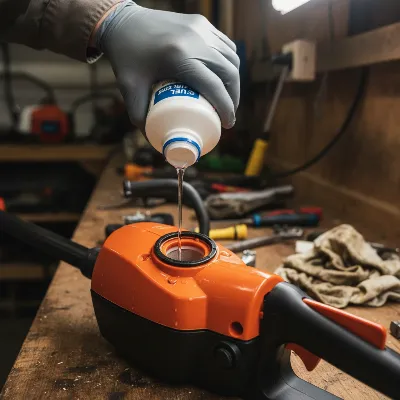
Begin by addressing the most straightforward possibilities. First, ensure your fuel tank contains fresh, correctly mixed fuel. For two-stroke engines, this typically means a 50:1 ratio of unleaded gasoline to 2-stroke oil. Stale fuel is a major culprit, so if your saw has been sitting, drain the old fuel and replace it with a fresh batch. Next, review your pole saw’s starting procedure. Engage the chain brake, press the primer bulb 7-10 times until fuel is visible in the bulb, pull the choke out fully, then pull the starter cord up to 5 times until the engine “coughs” or sounds like it’s about to start. Push the choke in to half (or off, depending on your model), then pull the cord again until it starts. If you’ve pulled the cord many times without success, you might have a flooded engine. To clear it, disengage the choke completely, hold the throttle wide open, and pull the starter cord several times to clear the excess fuel. Let it sit for 15-20 minutes before attempting to start again using the correct procedure.
 Fresh fuel mixture being poured into a gas pole saw, emphasizing the importance of correct fuel for starting
Step 2: Inspect the Spark Plug
The spark plug is vital for ignition. To check it, first, disconnect the spark plug wire. Use a spark plug wrench to carefully remove the spark plug from the cylinder head. Once removed, inspect it:
- Fouling: Is it covered in black carbon, oil, or fuel residue? This indicates improper combustion or a rich fuel mixture. Clean it with a wire brush or replace it.
- Damage: Check for cracked porcelain or a bent electrode. Any damage warrants replacement.
- Wetness: If the plug is wet with fuel, the engine might be flooded, or there’s an issue with fuel delivery. If it’s completely dry, the engine isn’t getting fuel.
To check for spark, reattach the spark plug to its wire but do not screw it back into the engine. Hold the threaded metal base of the plug firmly against a bare metal part of the engine (e.g., a cooling fin) to create a ground. Pull the starter cord briskly while watching the gap between the electrodes. You should see a strong, blue spark. If there’s no spark, or it’s weak and yellow, the plug is bad, or there’s an issue with the ignition coil. Ensure the spark plug gap is correct (usually 0.024-0.028 inches, check your manual) using a spark plug gapping tool before reinstalling a new plug.
Step 3: Examine the Fuel System
Problems here can prevent fuel from reaching the engine.
- Fuel Lines: Inspect the visible fuel lines for cracks, kinks, or deterioration. Old, hardened lines can crack and draw air, disrupting fuel flow. Replace any damaged lines.
- Fuel Filter: The fuel filter is typically located inside the fuel tank, at the end of a fuel line. Use a hook or pliers to retrieve it. If it’s clogged with debris or discolored, replace it. A clean fuel filter ensures a steady supply of clean fuel.
- Primer Bulb: Press the primer bulb several times. If it’s cracked, hard, or doesn’t return to shape, it might not be drawing fuel effectively. Replace it if it’s faulty.
Step 4: Clean or Replace the Air Filter
A dirty air filter restricts airflow, leading to a “rich” fuel mixture that’s hard to ignite. Locate the air filter housing, usually a cover secured by clips or screws. Remove the filter; if it’s heavily caked with sawdust and debris, clean it thoroughly with compressed air or soap and water (if it’s a washable type, allow it to dry completely). If it’s too dirty or damaged, replace it with a new one.
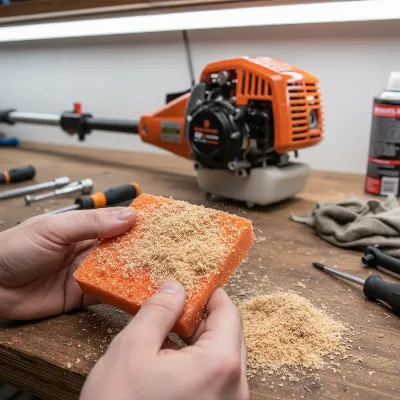 A person cleaning a dirty air filter from a gas pole saw, highlighting the importance of clear airflow.
Step 5: Address Carburetor Issues
The carburetor precisely mixes air and fuel. Signs of a clogged carburetor include the engine starting but quickly dying, running poorly, or not starting at all. If you’re comfortable with small engine repair, you can attempt to clean it. This usually involves removing the carburetor, disassembling it, cleaning internal passages with carburetor cleaner, and replacing gaskets or diaphragms, especially the metering diaphragm. However, carburetor cleaning and rebuilding can be intricate. If you’re unsure, it’s often best to consult a professional or consider a replacement carburetor if cleaning doesn’t resolve the issue.
Step 6: Check the Recoil Starter and Kill Switch
Finally, check the recoil starter. If the rope pulls out but doesn’t retract, or feels loose, the spring mechanism might be broken. This requires disassembling the starter housing, which can be complex. Less commonly, ensure the kill switch is in the “run” or “on” position. Sometimes, this simple oversight is the cause of a no-start condition.
Troubleshooting Checklist for a Non-Starting Gas Pole Saw
This table summarizes common issues and their typical solutions, helping you systematically diagnose your pole saw.
| Component | Symptom | DIY Fix | When to Call a Pro |
|---|---|---|---|
| Fuel | Engine cranks but won’t fire; sputtering | Drain old fuel, replace with fresh 50:1 mix; add fuel stabilizer for storage | Persistent fuel delivery issues (e.g., carburetor not responding to cleaning) |
| Spark Plug | No spark; wet, black, or damaged plug | Clean, gap, test for spark, replace if faulty | No spark even after replacing plug (points to ignition coil or kill switch issues) |
| Air Filter | Engine bogs down, struggles to start, runs rough | Clean or replace the air filter | – |
| Fuel Filter | Hard starting; loss of power; engine dies | Replace the fuel filter | – |
| Primer Bulb | Doesn’t fill with fuel; cracked or unresponsive | Replace the primer bulb | – |
| Carburetor | Engine won’t idle; runs rough; won’t start after fuel/spark checks | Basic cleaning of accessible parts; minor adjustment if experienced | For a full rebuild, complex adjustments, or if cleaning fails |
| Recoil Starter | Rope doesn’t pull; doesn’t retract | Inspect rope for fraying and replace; minor spring repair (if knowledgeable) | Major recoil assembly damage or if internal components are complex |
| Kill Switch | Engine has fuel and spark but won’t fire | Ensure switch is in “ON” or “RUN” position | If switch is faulty and prevents ignition |
Preventative Maintenance to Avoid Starting Issues
Regular maintenance is key to preventing most starting problems and extending the life of your gas pole saw.
- Use Fresh, Correctly Mixed Fuel: Always use fuel that is less than 30 days old. For two-stroke engines, strictly adhere to the manufacturer’s recommended fuel-to-oil ratio (commonly 50:1). Consider using a fuel stabilizer if storing the saw for more than a month to prevent fuel breakdown and gumming up the carburetor.
- Clean Air and Fuel Filters Regularly: Inspect your air filter after every few uses and clean or replace it as needed. Similarly, check and replace your fuel filter annually or every 50 hours of operation to ensure clean fuel delivery.
- Inspect Spark Plug Periodically: Remove and inspect the spark plug at the beginning of each season or after extensive use. Clean off any carbon buildup and ensure the gap is correct. Replace it annually or if it shows signs of wear or damage.
- Proper Storage: Before storing your pole saw for an extended period (e.g., over winter), either run the fuel tank dry or drain the fuel and add a fuel stabilizer to the remaining fuel. This prevents stale fuel issues and carburetor clogs.
Conclusion
Getting your gas pole saw to start doesn’t have to be a daunting task. By systematically checking the fuel, air, and ignition systems, you can quickly identify and often resolve the most common starting problems. From ensuring you’re using fresh, correctly mixed fuel to inspecting and cleaning your spark plug, air filter, and fuel filter, many fixes are well within the grasp of a DIY enthusiast. Regular preventative maintenance is your best defense against these frustrating no-start scenarios, ensuring your pole saw is always ready for action. So, take these tips, roll up your sleeves, and get your valuable tool back to efficiently tackling those high branches. What’s the most common starting issue you’ve encountered with your gas pole saw, and how did you resolve it?
Frequently Asked Questions
Why is my pole saw getting fuel but no spark?
If your pole saw has fuel but no spark, the issue likely lies with the ignition system. First, check your spark plug for fouling or damage and ensure it’s properly gapped. If the plug is good, the problem could be the spark plug wire connection, the kill switch (ensure it’s in the “run” position), or a faulty ignition coil. Testing the spark plug by grounding it against the engine block while pulling the starter cord will confirm if spark is present.
How often should I change the spark plug on a gas pole saw?
It’s generally recommended to inspect your gas Pole Saw’s spark plug at the start of each pruning season or every 25-50 hours of operation. Replace it annually, or sooner if you notice significant carbon buildup, electrode wear, or damage to the porcelain insulator. A fresh spark plug ensures optimal engine performance and easier starting.
Can old gas really prevent a pole saw from starting?
Absolutely. Old gasoline, especially fuel that’s been sitting for more than 30 days, can significantly degrade. The volatile components that aid ignition evaporate, leaving behind a less potent, sometimes gummy residue. This stale fuel can cause hard starting, rough running, or prevent the engine from starting altogether, and can even clog fuel filters and carburetors. Always use fresh fuel, and consider a fuel stabilizer for storage.